Is Rotisserie Chicken Healthy? The Truth from a Dietitian

On Dec 15, 2024, Updated Apr 27, 2026
This post may contain affiliate links. Please read our disclosure policy.
Yes, rotisserie chicken is healthy for most people. And if you’ve seen the viral posts claiming otherwise, I’d love to help set the record straight.
It’s a convenient, high-protein lean meat that fits into almost any healthy eating goal. The one real caveat worth knowing about: sodium. Store-bought rotisserie chickens are significantly higher in sodium than a chicken you’d roast at home, and depending on where you shop, that difference can be dramatic.
In this post, I’ll walk you through the full nutritional picture, which stores have the lowest sodium, what the additives actually mean, and how to make rotisserie chicken work for a week of easy, balanced meals.
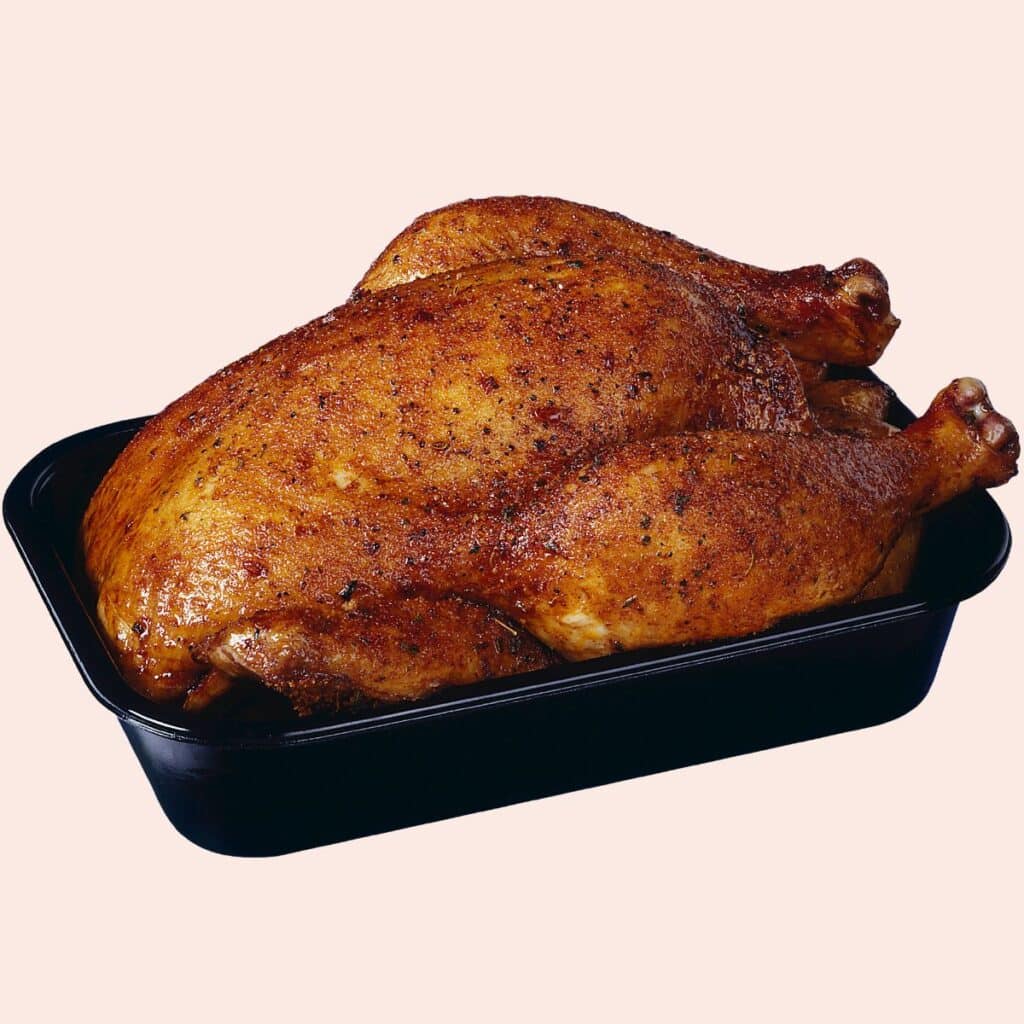
Table of Contents
- What’s the deal with rotisserie chicken?
- Nutritional Breakdown
- Health Benefits
- Potential Drawbacks
- What About Additives?
- Is Rotisserie Chicken Healthy for Everyone?
- Rotisserie Chicken Cost
- Is Costco Rotisserie Chicken Healthy?
- Making Your Own Rotisserie Chicken
- How to Get Multiple Easy Meals with Rotisserie Chicken
- Frequently Asked Questions
- That’s a wrap
- More trendy topics
What’s the deal with rotisserie chicken?
Rotisserie chickens are whole birds that are skewered on a metal rod and then slowly turned as they cook in a hot oven. As the bird keeps turning, the juices baste the bird and the meat is cooked very evenly. The resulting chicken meat is juicy and flavorful.
You’ll often find them hot and ready to eat at your local grocery store, from Costco to Whole Foods, making them a genuinely convenient option for busy people or anyone who doesn’t love spending time in the kitchen.
Nutritional Breakdown
Store-bought rotisserie chicken is very similar to a homemade roast chicken with a few key differences. Here, we’ll compare a rotisserie chicken with a traditional whole roasted chicken and chicken breast.
Keep in mind, these are just estimates. Actual preparation methods and seasonings will vary widely.
| Rotisserie chicken (3 oz.) | Whole roasted chicken (3 oz.) | Chicken breast (3 oz.) | |
| Calories | 180 | 190 | 134 |
| Fat | 10g | 11g | 2.7g |
| Saturated fat | 2.7g | 3.2g | 0.8g |
| Sodium | 331mg | 62mg | 40mg |
| Carbs | 0g | 0g | 0g |
| Protein | 22g | 20g | 26g |
As you can see, there’s not much difference between the two with the exception of sodium, and that’s because store-bought rotisserie chickens tend to be significantly higher in sodium. For example, an average rotisserie chicken has 331 mg of sodium vs about 62 mg in a homemade roasted chicken.
Whether you buy one from the store or make a whole chicken at home, both options are a great source of lean protein. A standard serving size of about three ounces of rotisserie chicken or homemade roasted chicken will both contain around 20 grams of protein.
Chicken, including rotisserie chicken, is also packed with important vitamins like vitamin B6 and B12, along with minerals such as phosphorus and selenium.
Nutritional values of rotisserie chicken or homemade roast chicken will vary depending on preparation methods and seasoning, as well as if you’re choosing light or dark meat. Dark meat is a bit higher in fat and calories than light meat.
The bottom line: you’ll find the same nutrients and lean source of protein in chickens that you’ll find if you roast a whole chicken at home. Be mindful of the high sodium levels if that’s important for you, but rotisserie chickens can still be a healthy choice for many people.
Health Benefits
One of the biggest pros of rotisserie chicken is that it’s a great source of protein. Protein plays important roles in the body including muscle repair, hormone production, and immune support, and it’s essential for staying full and satisfied after your meal.
In addition to protein, rotisserie chicken provides significant amounts of B vitamins, particularly B6 and B12, which play vital roles in energy metabolism and neurological function. Minerals like phosphorus contribute to strong bones and teeth, while selenium acts as an antioxidant, helping to protect cells from damage.
And I cannot overstate the convenience factor. For busy people, having a ready-to-eat protein option can make the difference between a balanced meal at home and a last minute drive-through run.
Potential Drawbacks
Despite its many benefits, rotisserie chicken isn’t without its drawbacks. One common concern is the high sodium content found in many store-bought versions. Sodium is used both for flavor and as a preservative, and excessive intake can contribute to high blood pressure and other health issues.
To give you a real sense of the range, here’s how some of the most popular grocery store rotisserie chickens compare on sodium per 3-oz serving, based on data from Consumer Reports and store websites:
| Store | Sodium per 3 oz serving |
| Sam’s Club | 550mg |
| Costco | 460mg |
| Walmart | 250mg |
| Whole Foods (organic plain) | 70mg |
| Whole Foods (nonorganic classic) | 310mg |
| Kroger Simple Truth | 40mg |
| Wegmans (nonorganic) | 95mg |
Sodium content is based on current store websites and packaging and may vary by location or if stores update their recipes. Always check the label when you can.
That’s a massive range. If sodium is something you’re watching, where you buy your chicken matters just as much as whether you buy one at all. Kroger Simple Truth and Whole Foods organic are consistently the lowest-sodium options. Costco and Sam’s Club are convenient and affordable, but come with a significantly higher sodium load.
One thing worth noting about Whole Foods: their chickens are not injected with a solution, so the sodium sits on the skin from seasoning rather than running through the meat. That means if you skip the skin, you skip most of the sodium.
For context, the recommended daily sodium limit for most adults is 2,300mg. One serving of a Sam’s Club rotisserie chicken accounts for nearly a quarter of that before anything else hits your plate.
What About Additives?
Another common concern is the presence of additives and preservatives. Some store-bought rotisserie chickens may use these to extend shelf life, which can be an issue for those looking to consume more natural foods.
For example, rotisserie chickens often include ingredients like sodium phosphates, carrageenan, other salt solutions and maltodextrin. Additives are used to keep the poultry fresh, tender and juicy as well as fend off bacterial growth. You’ll also see chickens injected with chicken broth or something similar.
While these additives are regulated and generally considered safe, those who prefer to avoid them may want to double check labels or make their own rotisserie chicken at home.
Additionally, the specific meat you choose and the preparation and flavoring of rotisserie chicken can contribute to excess fat and calories. Skipping the skin is one easy way to cut down on these, as most of the added fats are found there. White meat is also generally leaner.
Is Rotisserie Chicken Healthy for Everyone?
If you are trying to lose weight, rotisserie chicken is one of the most practical proteins for weight loss. It is high in protein, which keeps you full and satisfied, and low in carbohydrates. Removing the skin reduces calories fruther without sacrificing much. Pair it with plenty of veggies and a fiber-rich carb like whole grains or roasted potatoes for a balanced meal that does not require any real cooking.
If you’re watching your sodium, refer to the store comparison table above and choose your store accordingly. Kroger Simple Truth and Whole Foods organic are your best bets. Removing the skin at Whole Foods locations also helps significantly since their seasoning sits on top rather than being injected through the meat.
If you’re just trying to eat healthier, including a lean protein like rotisserie chicken is a great place to start. It is a whole food protein source that requires zero cooking, fits into almost any meal, and is genuinely more nutritious than most drive-through or takeout options. Pair it with a vegetable and a whole grain and you have a balanced meal with almost no effort. That’s a win in my book.
Rotisserie Chicken Cost
Store bought rotisserie chicken generally costs more than a fresh, raw chicken, but the convenience of having a ready-to-eat meal can save you significant time and effort.
At my local grocery stores, a rotisserie chicken ranges from $7-10 depending on where you shop, but it’s important to note that a rotisserie chicken is typically about half the size of a regular raw chicken.
A whole raw chicken is typically around $7-10, but the chicken is usually at least double the size of a rotisserie chicken. That means you’re paying around double for a pre-cooked rotisserie chicken.
An exception to the costlier rotisserie chicken is the famous Costco $5 roasted chicken. Known as a “loss leader,” Costco sells it at a very low price to entice customers into the store, banking on additional purchases to cover the low markup. And it works: one report claims that Costco sold an astounding 137 MILLION rotisserie chickens in 2023.
Speaking of Costco rotisserie chickens, let’s discuss whether or not they’re a good option.
Is Costco Rotisserie Chicken Healthy?
Costco rotisserie chicken is very similar to any other rotisserie chicken. While there may be some additives and preservatives, they’re generally safe in the amounts consumed. Costco chickens are inexpensive, convenient, and a great source of easy lean protein. The one thing to pay attention to is sodium, because a Costco rotisserie chicken has about 460mg per 3 oz.
This is a popular debate that floats around social media, but there’s really not much to report. While a homemade roast chicken is arguably healthier, grabbing a Costco chicken every now and then is unlikely to make or break anyone’s health.
Making Your Own Rotisserie Chicken
With the rise of new kitchen gadgets, making your own rotisserie chicken at home is easier than ever. For example, this 7-in-1 Air Fryer has a rotisserie function.
Making a rotisserie chicken at home allows you to roast a chicken without as much sodium, and you have full control over every ingredient.
How to Get Multiple Easy Meals with Rotisserie Chicken
One of the biggest myths about healthy eating is that it requires hours in the kitchen every week. Depending on how many people you are feeding, a single rotisserie chicken can stretch into two or three meals with almost no additional cooking, and that is exactly the kind of realistic healthy eating I am here for.
For two people, one bird goes a long way. Think a easy dinner on night one, then shredded chicken for lunches or a quick weeknight soup or casserole the next day.
For a family of four, you’ll likely get one solid dinner and maybe enough leftover for one person’s lunch the next day. In that case, grabbing two chickens is absolutely worth it, and at $7 to $10 each it is still one of the most affordable ways to get a high protein meal on the table fast.
However you use it, here is how I would approach it:
- Night one: the easy dinner Serve it straight from the store with a bag of microwaveable vegetables and some rice or a crusty piece of bread. No cooking required, no guilt required. This is the whole point.
- Use the leftovers: quick lunches and dinners Shred whatever is left and use it as the protein base for a salad, wrap, soup, or casserole. My favorites are linked below, and most come together in under 30 minutes because the hardest part, cooking the protein, is already done.
- Bonus: homemade bone broth For some bonus points, you can throw the bones into your soup pot or crock pot. Add one onion, halved, two carrots, and two stalks of celery, and cover with water. Simmer for a few hours and then strain for a batch of your own fresh chicken bone broth, and you can use it to make soups, stews, rice, and more.
Here are a few of my favorite simple recipes to use rotisserie chicken for:

Frequently Asked Questions
Yes, rotisserie chicken is a healthy choice for most people. It is a convenient source of lean protein, B vitamins, and important minerals like selenium and phosphorus. The main thing to be mindful of is sodium, which varies significantly by store. If sodium is a concern for you, choosing Kroger Simple Truth or Whole Foods organic are your lowest-sodium options.
A 3-oz serving of rotisserie chicken contains around 22 grams of protein, making it an excellent option for hitting your daily protein goals.
The skin is higher in fat and calories than the meat itself, and for store-bought rotisserie chickens that are injected with a sodium solution, most of that sodium runs through the whole chicken. Removing the skin does reduce fat and calories, but it will not dramatically lower sodium the way it does with Whole Foods chickens, where the seasoning sits on top of the skin rather than being injected.
Rotisserie chicken keeps safely in the refrigerator for 3 to 4 days, according to USDA guidelines. Store it in an airtight container and refrigerate it within two hours of purchase. For longer storage, it freezes well for up to four months. Shred or slice it before freezing for easier portioning later.
Absolutely. Rotisserie chicken is one of the most practical proteins for weight loss because it is high in protein, which keeps you full, and low in carbohydrates. Removing the skin reduces calories further. Pairing it with plenty of vegetables and a whole grain rounds out a balanced, satisfying meal without a lot of effort.
It can be, but sodium is worth watching. If you have high blood pressure or have been told to limit sodium, opt for lower-sodium store brands like Kroger Simple Truth (40mg per serving) or Whole Foods organic (70mg per serving), and skip the skin at Whole Foods locations since the seasoning is applied on top rather than injected. When in doubt, roasting your own chicken at home gives you full control.
That’s a wrap
The bottom line: rotisserie chicken is a convenient and nutritious meal option. It’s a great source of lean protein and one of the best time savers in a busy week. If sodium is something you are mindful of, the store comparison table above is your best friend.
Sometimes having a convenient option that’s a little less ideal than homemade can be the difference between a balanced meal at home and grabbing takeout or fast food. When it comes to nutrition, real life matters too. You don’t need to eat perfectly to eat healthy.
More trendy topics
I love reviewing trendy topics and conversations. Here’s a few more you might like!