This post may contain affiliate links. Please read our disclosure policy.
If you’ve been seeing cottage cheese absolutely everywhere lately: on TikTok, in your grocery store, in recipe roundups, you might be wondering: is cottage cheese actually good for you, or is this just another food trend?
As a Registered Dietitian with over 10 years of experience (and someone who has made a lot of cottage cheese recipes), I’m here to give you a straight answer backed by real nutrition science.
The short version? Yes, cottage cheese is genuinely good for you and it’s one of the most underrated foods in the dairy aisle. But like any food, the full picture is a little more nuanced than a simple yes or no. Let me break it all down for you.
💡Quick Answer: Cottage cheese is an excellent source of high-quality protein, calcium, and essential vitamins and minerals. It’s low in calories, low in carbohydrates, and particularly high in casein protein, which supports muscle building, appetite control, and steady energy. Most healthy adults can benefit from including it in their diet regularly. Keep reading for the full breakdown including whether it’s good for weight loss, who should be cautious, and the best ways to actually enjoy it (even if you think you don’t like it).
Table of Contents
- What is Cottage Cheese?
- Cottage Cheese Nutrition Facts
- 4 Real Health Benefits of Cottage Cheese
- Is Cottage Cheese Good for Weight Loss?
- Is It Okay to Eat Cottage Cheese Every Day?
- Find Your Cottage Cheese Starting Point
- Cottage Cheese vs. Greek Yogurt: Which Is Better?
- Frequently Asked Questions
- The Bottom Line: Is Cottage Cheese Good for You?
- More Nutrition Questions Answered
What is Cottage Cheese?
Before we dive into the benefits, let’s quickly cover what cottage cheese actually is because understanding how it’s made helps explain why it’s so nutritious.
Cottage cheese is made by adding an acid (like vinegar or lemon juice) to pasteurized cow’s milk, which causes the milk to curdle and separate into curds and whey. The curds are rinsed and mixed with a small amount of cream or milk, which is what gives cottage cheese its characteristic soft texture.
You’ll find it in a few different forms:
- Small curd vs. large curd. This refers to the size of the protein curds. Both have similar nutrition; it mostly comes down to texture preference.
- Fat-free, 1%, 2%, and whole milk (4%). The fat content affects both the nutrition profile and the texture. More on this below.
- Whipped or blended. Increasingly popular, this is regular cottage cheese that’s been blended until smooth. It’s the secret weapon in many of my recipes!
Cottage Cheese Nutrition Facts
Here’s what you’re getting in a standard 1/2 cup serving of cottage cheese, and how the different fat percentages compare, based on USDA data:
| Nutrient | Fat-free 0% | 1% | 2% | Whole milk 4% |
|---|---|---|---|---|
| Calories | 80 | 90 | 90 | 110 |
| Protein | 14g | 14g | 12g | 12g |
| Carbohydrates | 6g | 5g | 5g | 5g |
| Total fat | 0g | 1.5g | 2.5g | 5g |
| Saturated fat | 0g | 1g | 1g | 3g |
| Sodium | ~360mg | ~370mg | ~380mg | ~340mg |
| Texture | Watery | Lighter | Creamier | Richest |
*All values approximate per 1/2 cup (113g) based on USDA data. Sodium in particular varies significantly by brand. Always check your label.
Full-Fat vs. Low-Fat Cottage Cheese
I get asked about this all the time. Here’s my honest take as an RD: any fat level works, and the “right” choice depends on your goals and how you’re using it.
That said, emerging research on full-fat dairy is worth noting. Several large studies have found that full-fat dairy consumption is not associated with increased cardiovascular risk and may actually support metabolic health, challenging the decades-old advice to always choose low-fat dairy. The fat in dairy also helps you absorb fat-soluble vitamins more effectively.
From a practical standpoint: 2% and full-fat (4%) cottage cheese are creamier, richer, and perform significantly better in recipes. It works better especially when heated, blended, or used as a sauce base. Fat-free or 1% cottage cheese tends to be more watery and can separate when cooked.
My recommendation: if your goal is general health or you’re using cottage cheese in recipes, go with 2% or whole milk. If you’re strictly counting calories or fat grams for a specific health goal, low-fat works fine, just know the texture will be different.
How Do Popular Cottage Cheese Brands Compare? (per 1/2 cup)
| Good Culture | Daisy | Breakstone’s | Hood | Friendship | |
|---|---|---|---|---|---|
| Milkfat | 2% | 2% | 2% | 1% | 2% |
| Calories | 80 | 90 | 100 | 90 | 100 |
| Protein | 14g | 13g | 13g | 13g | 14 to 15g |
| Total Fat | 2.5g | 2.5g | 2.5g | 1.5g | 3g |
| Sodium | ~310mg | ~350mg | ~280mg | ~390mg | ~390mg |
| Live Cultures | Yes | Yes | Yes in certain varieties | No | No |
| Added Gums/Thickeners | No | No | Tapioca starch | Yes | No |
Values approximate per 1/2 cup (113g). Always check your label as formulas can vary and change.
A few things worth noting as an RD:
- Good Culture is my go-to. Highest protein, one of the lower sodium options of the group, live cultures, and simple ingredients.
- Daisy is another I buy regularly and it’s widely available, affordable, and simple. Just three ingredients (cultured skim milk, cream, salt).
- Breakstone’s has the lowest sodium of all five, which is great if you’re watching that.
- Friendship has impressive protein but is higher in sodium.
- Hood contains multiple gums, which aren’t harmful but worth knowing about if you prefer a simpler ingredients list.
4 Real Health Benefits of Cottage Cheese
1. It’s A Great Protein Source
This is the big one. Cottage cheese delivers an impressive 12 to 14 grams of protein per half cup, which puts it on par with or ahead of other protein staples like Greek yogurt and eggs.
But it’s not just the amount of protein that makes cottage cheese special. It’s the type.
The majority of protein in cottage cheese is casein protein, roughly 80% casein and 20% whey. Casein is what’s called a slow-digesting protein, meaning your body breaks it down gradually over several hours rather than all at once. This has two practical benefits:
- It keeps you feeling full longer. Casein forms a gel-like substance in your stomach, which slows gastric emptying and helps control appetite.
- It supports muscle building and recovery overnight. This is why many athletes and fitness enthusiasts eat cottage cheese before bed. The slow release of amino acids supports muscle protein synthesis while you sleep.
2. Supports Bone Health
Cottage cheese is a solid source of calcium, phosphorus, and vitamin B12, three nutrients that work together to support strong bones and teeth.
One serving provides about 15% of your daily calcium needs. While it’s not quite as calcium-dense as milk or yogurt, it contributes meaningfully to your daily intake, especially if you’re eating it regularly.
Phosphorus is equally important. It works alongside calcium to build and maintain bone density. Most Americans get adequate phosphorus, but cottage cheese provides a nice boost, especially for those who aren’t big meat eaters.
3. May Help Regulate Blood Sugar
With just 4 to 5 grams of carbohydrates per serving and no added sugar (in plain varieties), cottage cheese has a minimal impact on blood sugar levels.
The high protein content helps too. Protein slows the absorption of carbohydrates when eaten together, which can help prevent the blood sugar spikes and crashes that lead to energy dips and cravings. This makes plain cottage cheese a smart choice for people managing blood sugar, following a lower-carb diet, or simply trying to maintain steady energy throughout the day.
Pair it with a piece of fruit, some veggies and crackers, or whole grain toast for a balanced snack that combines fiber, protein, and complex carbohydrates.
4. It’s Incredibly Versatile (and That Matters More Than You Think)
I know “versatile” doesn’t sound like a health benefit, but hear me out. One of the biggest barriers to eating well consistently is food boredom. When something is easy to prepare and genuinely enjoyable to eat, you’re far more likely to actually eat it.
Cottage cheese checks both boxes. It works in sweet and savory dishes, it can be eaten plain or blended into a completely smooth texture, and it seamlessly replaces higher-calorie ingredients like heavy cream, sour cream, and mayonnaise in recipes without sacrificing taste.
I’ve personally converted dozens of self-declared cottage cheese skeptics. The key? Starting with recipes where the texture is transformed or the flavor is complemented by other ingredients. More on that below.
Try It: My Cottage Cheese Bagels are the gateway recipe for cottage cheese skeptics. Just three simple ingredients, no blender required, and the cottage cheese bakes right into the dough. They have 10 grams of protein per bagel and absolutely delicious.

Is Cottage Cheese Good for Weight Loss?
This is one of the most-searched questions about cottage cheese. The answer is nuanced with a few important caveats.
- High protein means greater satiety. Research consistently shows that higher-protein diets support weight management by reducing appetite and increasing feelings of fullness. The casein protein in cottage cheese is particularly effective here because of its slow digestion rate. It keeps hunger at bay for longer than faster-digesting proteins.
- Low calorie density. At 90 to 110 calories per half cup and 12 or more grams of protein, cottage cheese has an excellent calorie-to-protein ratio. You’re getting a lot of nutritional value for the calorie cost.
- Low in carbohydrates. With only 4 to 5 grams of carbs per serving and no added sugar (in plain varieties), it fits well into lower-carb and moderate-carb eating patterns that support weight management.
- It can replace higher-calorie ingredients. Swapping sour cream, heavy cream, or mayonnaise for cottage cheese in recipes can meaningfully reduce the calorie count of meals without sacrificing creaminess or flavor.
How Much Cottage Cheese Should You Eat For Weight Loss?
No single food causes or prevents weight loss. Overall dietary patterns matter most. And while there’s no universal prescription, most research suggests aiming for 25 to 30 grams of protein per meal to support satiety and muscle retention. One cup of cottage cheese gets you close to that on its own.
Try It: My Cottage Cheese Beef Sweet Potato Bowl is one of my most popular recipes for a reason. It’s a complete, balanced, high-protein meal that will actually keep you full.
Is It Okay to Eat Cottage Cheese Every Day?
For most healthy adults, yes. Eating cottage cheese daily is perfectly fine and can be a great way to consistently hit your protein goals.
A few things to keep in mind:
- Watch the sodium. Cottage cheese is naturally higher in sodium than some other protein sources, typically ranging from 300 to 500mg per half cup depending on the brand. If you’re managing blood pressure or are on a sodium-restricted diet, factor this into your daily sodium budget. Compare brands, as sodium levels vary significantly.
- Lactose considerations. Cottage cheese is a dairy product, so if you have lactose intolerance, you may experience digestive discomfort. Interestingly, the culturing process does reduce some lactose compared to milk, so some people with mild lactose sensitivity tolerate it fine.
- Dairy allergy. If you have a dairy allergy rather than an intolerance, cottage cheese is not appropriate and should be avoided.
- Saturated fat. If you’re eating whole milk cottage cheese daily, be mindful of it as part of your total saturated fat intake for the day, especially if you have cardiovascular concerns. Low fat or two percent cottage cheese is a reasonable middle ground.
For healthy adults without the above concerns? Daily cottage cheese is a perfectly sound food choice.
Find Your Cottage Cheese Starting Point
Not sure where to begin? Start here based on how you feel about cottage cheese right now.
“I’m not sure I even like it…” Start with these! The cottage cheese is completely hidden and you’d never know it was there.
- Cottage Cheese Bagels
- Cottage Cheese Cinnamon Rolls
- Cottage Cheese Egg Bites
- Cottage Cheese Brownies
“I’m open to it but want to ease in…” These transform the texture through blending and pair it with flavors that make it shine.
- High Protein Cheesecake Jars
- High Protein Buffalo Chicken Mac and Cheese
- Cottage Cheese Smoothie
- Cottage Cheese Queso Dip
“I already love cottage cheese — give me everything.” You’re my people. These are the recipes where cottage cheese is the star.
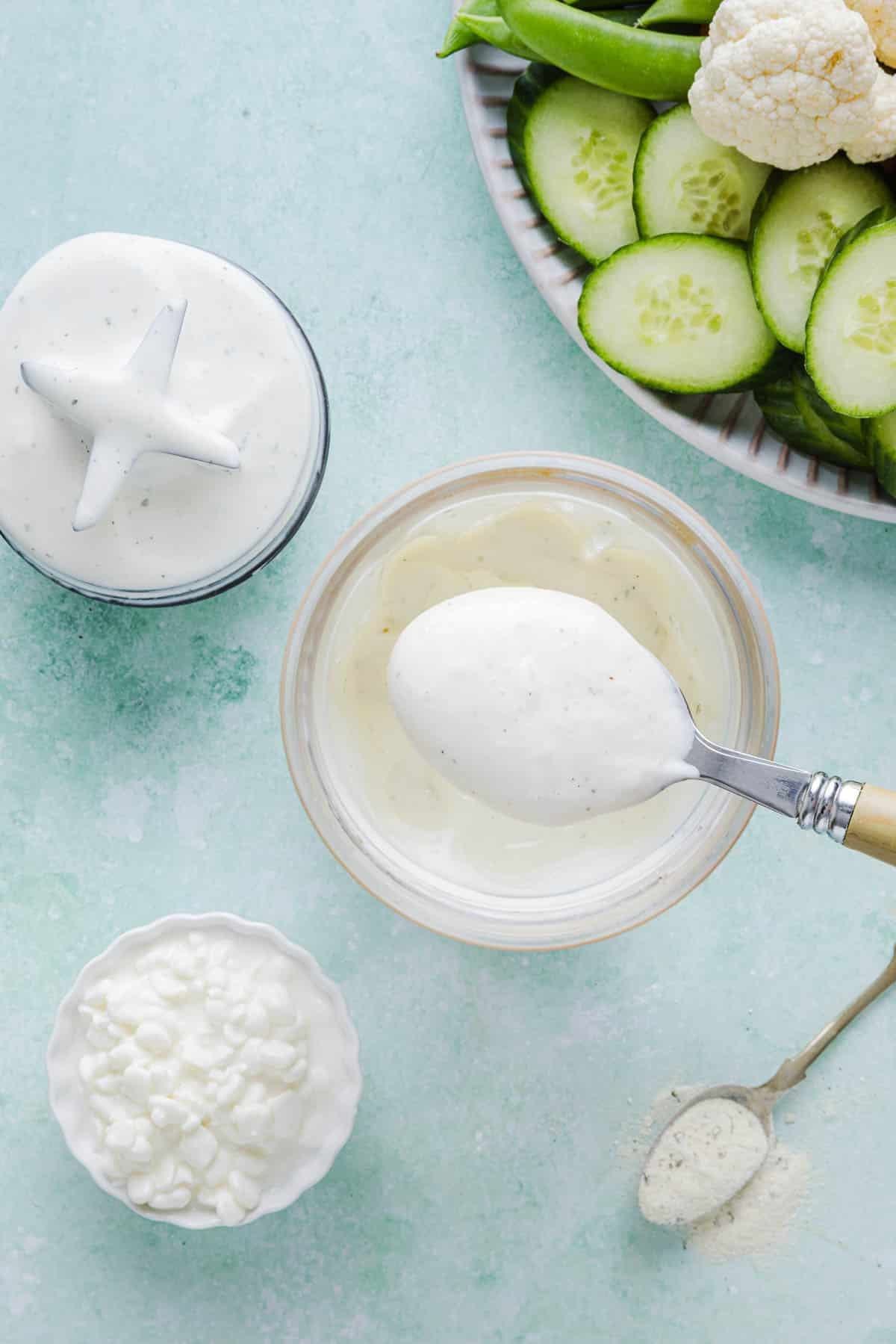
- Cottage Cheese Ranch Dressing
- High Protein Cottage Cheese Avocado Toast
- Cottage Cheese Pizza Bowl
- Cottage Cheese Egg Salad
Cottage Cheese vs. Greek Yogurt: Which Is Better?
Since both are popular high-protein dairy foods, this comparison comes up constantly. Here’s a quick breakdown:
| Cottage Cheese (2%, 1/2 cup) | Greek Yogurt (Plain, 2%, 1/2 cup) | |
|---|---|---|
| Protein* | up to 14g | 11 to 12g |
| Calories | 90 | 70 |
| Carbs | 5g | 4g |
| Fat | 2.5g | 2g |
| Calcium | ~15% DV | ~15% DV |
| Probiotics | Some brands | Yes |
| Sodium | Some brands up to 390mg | Typically 30-70mg |
*Protein content varies by brand. Values shown are approximate.
Both are excellent choices. Greek yogurt has the edge for probiotics and is much lower in sodium and calories. Cottage cheese has a slight protein edge and is often creamier in recipes due to its fat content and texture when blended. The best one is whichever you’ll actually eat consistently.
Personally, I use both regularly and think they complement each other well, with Greek yogurt for morning bowls and dressings, cottage cheese for cooked recipes, pasta sauces, and savory applications.
Frequently Asked Questions
Yes, for most healthy adults. Cottage cheese is a nutritious, high-protein food that fits well into a balanced daily diet. The main thing to monitor with daily consumption is sodium. Compare brands and choose lower-sodium options if you’re watching your intake.
Yes, cottage cheese can support weight loss. Its high casein protein content promotes satiety, its calorie-to-protein ratio is excellent, and it can replace higher-calorie ingredients in meals. It’s most effective as part of a balanced, calorie-appropriate eating pattern rather than as a standalone solution.
A half cup of low-fat or 2% cottage cheese contains approximately 12 to 14 grams of protein. One full cup delivers roughly 24 to 28 grams of protein, depending on the brand.
Most commercial cottage cheese does not contain live active cultures the way yogurt does, because the curds are washed during production. Some brands do add live cultures. Check the label if this is important to you.
Compared to other protein foods like chicken or eggs, yes. Cottage cheese is relatively higher in sodium, typically 300 to 500mg per half cup. This varies significantly by brand. If you’re on a sodium-restricted diet, compare labels and look for lower-sodium options.
It depends on the severity of your intolerance. Cottage cheese contains less lactose than milk because some is lost during the curdling process, and many people with mild lactose sensitivity tolerate it fine. If you have severe lactose intolerance, you may still experience symptoms. Start with a small amount and see how your body responds.
The main difference is texture. Small curd has smaller, more compact curds, while large curd has bigger, chunkier pieces. Nutritionally, they’re essentially identical. For most recipes (especially blended ones), it makes no difference at all. For eating plain or with toppings, it comes down to personal preference.
The main considerations are sodium (higher than many other protein foods), lactose (a concern for those with intolerance), and saturated fat for those monitoring cardiovascular health. For most healthy adults, none of these are dealbreakers. Just choose your brand wisely and factor it into your overall daily intake.
They’re different in useful ways. A half cup of cottage cheese has 12 to 14g of protein; two large eggs have about 12g. Eggs offer more fat-soluble vitamins (A, D, E, K) and choline. Cottage cheese offers more calcium and is easier to eat in larger quantities for higher protein needs. They complement each other beautifully, which is exactly why I combine them in recipes like my Cottage Cheese Egg Bake.
The Bottom Line: Is Cottage Cheese Good for You?
Genuinely and enthusiastically yes. Cottage cheese earns its spot as one of the most nutritious, protein-dense, versatile foods available at any grocery store. It supports muscle building, appetite control, blood sugar regulation, and bone health, all while being relatively low in calories and carbohydrates.
Whether you’re trying to lose weight, build muscle, eat more protein, or simply find more ways to eat well without sacrificing flavor, cottage cheese belongs in your kitchen.
Ready to get cooking? Explore all of my cottage cheese recipes, high-protein, easy to make, and designed to make eating well something you actually look forward to.
As a Registered Dietitian, I always recommend working with your own healthcare provider for personalized nutrition advice, especially if you have specific health conditions or dietary needs. Nutrition information in this post is based on USDA FoodData Central data and may vary by brand.