
This post may contain affiliate links. Please read our disclosure policy.
Pizza night gets a higher-protein twist with this high protein pizza. It’s made with a homemade Greek yogurt or cottage cheese crust, then topped with shredded chicken, mozzarella, and your favorite toppings. Each serving has over 30 grams of protein, and there’s no yeast or rising time required.
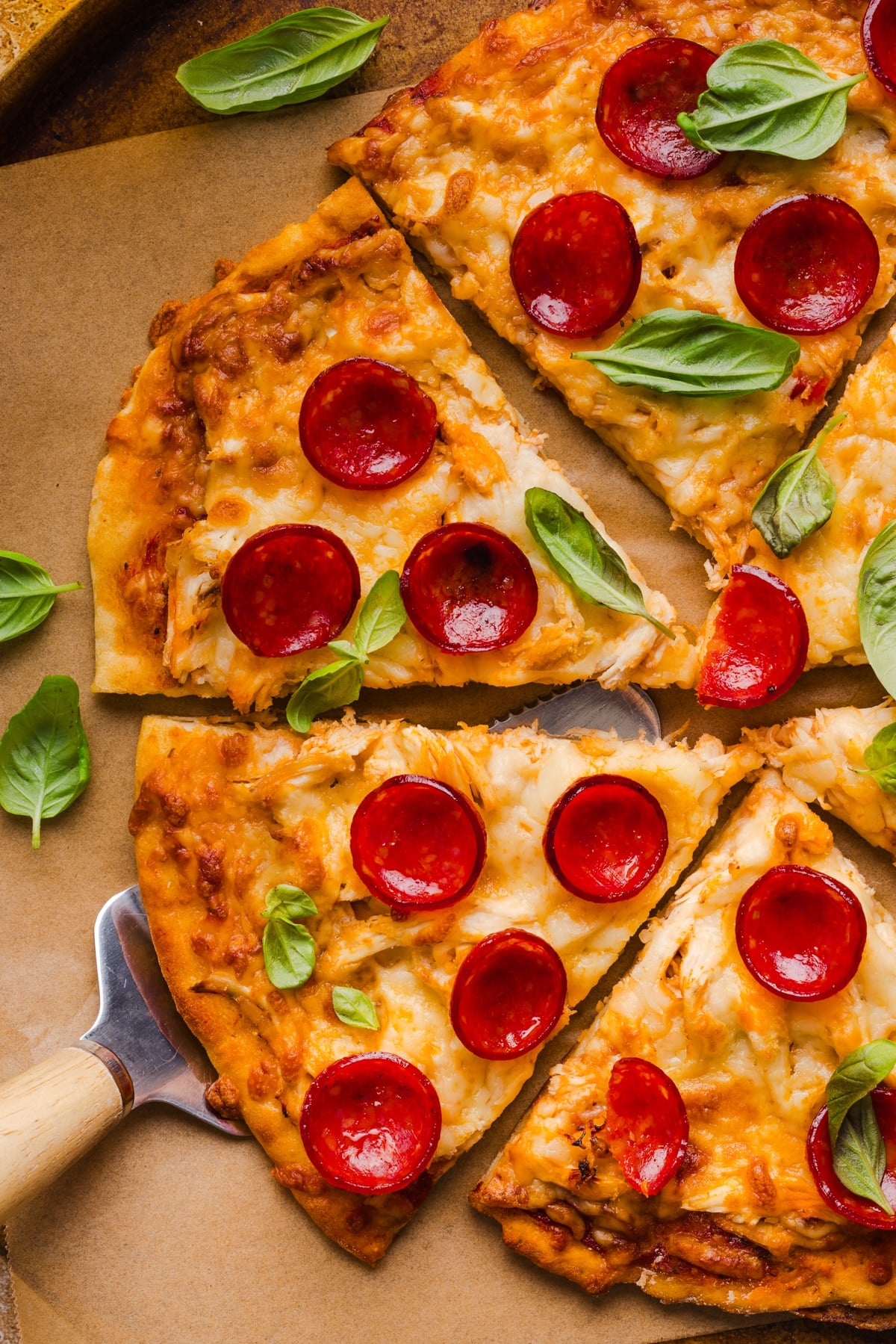
I love pizza night as much as anyone, and I’m definitely not above ordering takeout. But when I want something homemade that feels a little more filling, this high protein pizza is one of my favorite ways to do it.
As a dietitian, I’m all about finding simple ways to add more protein without turning a meal into something completely different. That was especially important with this recipe because if I’m making pizza, I still want it to taste like pizza.
This High Protein Pizza Tastes Like the Real Deal
That was the biggest thing I wanted to get right with this recipe. I wanted a real homemade crust, plenty of melty cheese, and all the toppings you’d expect from a regular pizza.
The dough gives you that homemade pizza feel while adding more protein, and the shredded chicken adds even more without taking over the flavor. It’s one of those recipes that feels like pizza night first and a higher-protein dinner second.
Here’s why I keep coming back to it:
- Over 30 grams of protein per serving. The crust, chicken, and cheese all add protein, so it keeps me fuller than a couple of regular slices without needing protein powder or any specialty ingredients.
- No yeast or rising time. The dough comes together with just a few basic ingredients and goes straight from mixing to rolling, so there’s no waiting around for it to rise.
- The crust actually holds up. Unlike a lot of other high protein pizza recipes, this crust stays sturdy once it’s rolled thin and baked. You can actually pick up a slice without it flopping under all that sauce and cheese.
- Easy to make your own. Stick with the chicken and pepperoni, or switch up the sauce and toppings depending on what you’re craving. I have plenty of pizza topping combinations to try below!
Ingredient Notes
There’s nothing complicated in this easy protein pizza, but a few ingredients are worth talking about before you start, especially the ones that make up the high protein pizza crust.
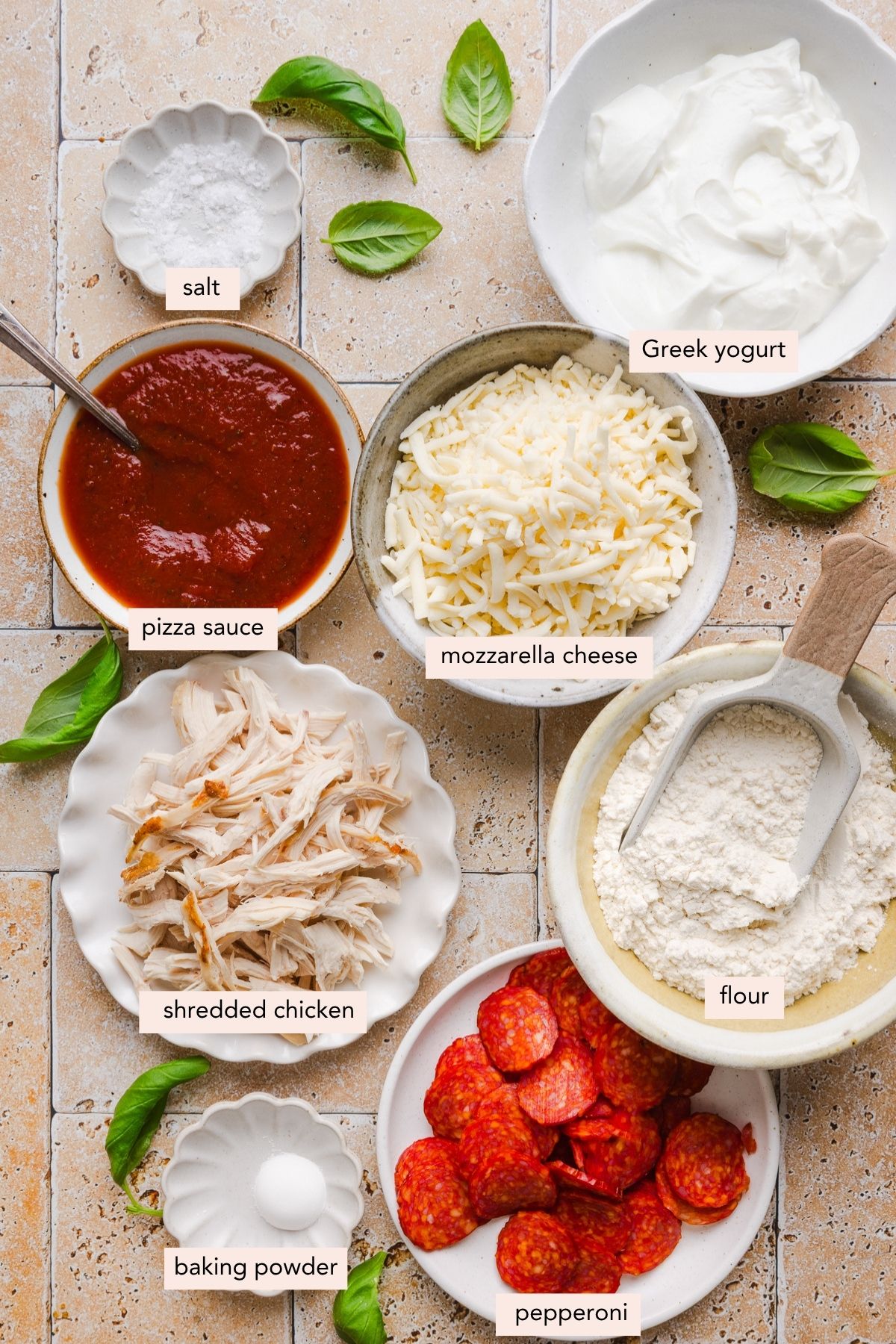
For full recipe instructions and complete list of ingredients, scroll down to the recipe card at the bottom of this page.
- All purpose flour, baking powder, and salt: These three work together to make the base of the crust. I used to use self-rising flour, but I switched to all-purpose flour since it’s a little more common and gives you more control over the salt and leavening. If you prefer self-rising flour, you can still use 1 cup and skip the baking powder and salt.
- Greek yogurt or cottage cheese: Both work well and add protein and moisture to the dough. Greek yogurt gives the crust a slight tang, while cottage cheese adds a mild, slightly savory flavor. If you’re using cottage cheese, like my cottage cheese pizza crust, don’t worry about the curds, they disappear as the crust bakes.
- Shredded chicken: Rotisserie chicken is my favorite shortcut here because it makes prep so easy. You can also make my air fryer shredded chicken if you want to cook it yourself. I like to season it with garlic powder, onion powder, Italian seasoning, salt, and pepper.
- Pizza sauce: Use whatever pizza sauce you already love. I usually grab this brand, but marinara or homemade pizza sauce works too.
- Mozzarella cheese: Mozzarella is my go-to because it gives you that classic melty pizza topping, but you can definitely mix things up. Parmesan, provolone, cheddar, Monterey Jack, feta, or even a little ricotta all work depending on the kind of pizza you’re making.
- Turkey pepperoni: I usually use turkey pepperoni because it’s often lower in saturated fat and calories than regular pepperoni, but either works. You can also use sausage, Canadian bacon, ham, bacon, ground beef, or extra chicken.
How to Make High Protein Pizza
Once you have your ingredients ready, this high protein pizza comes together in just a few simple steps:
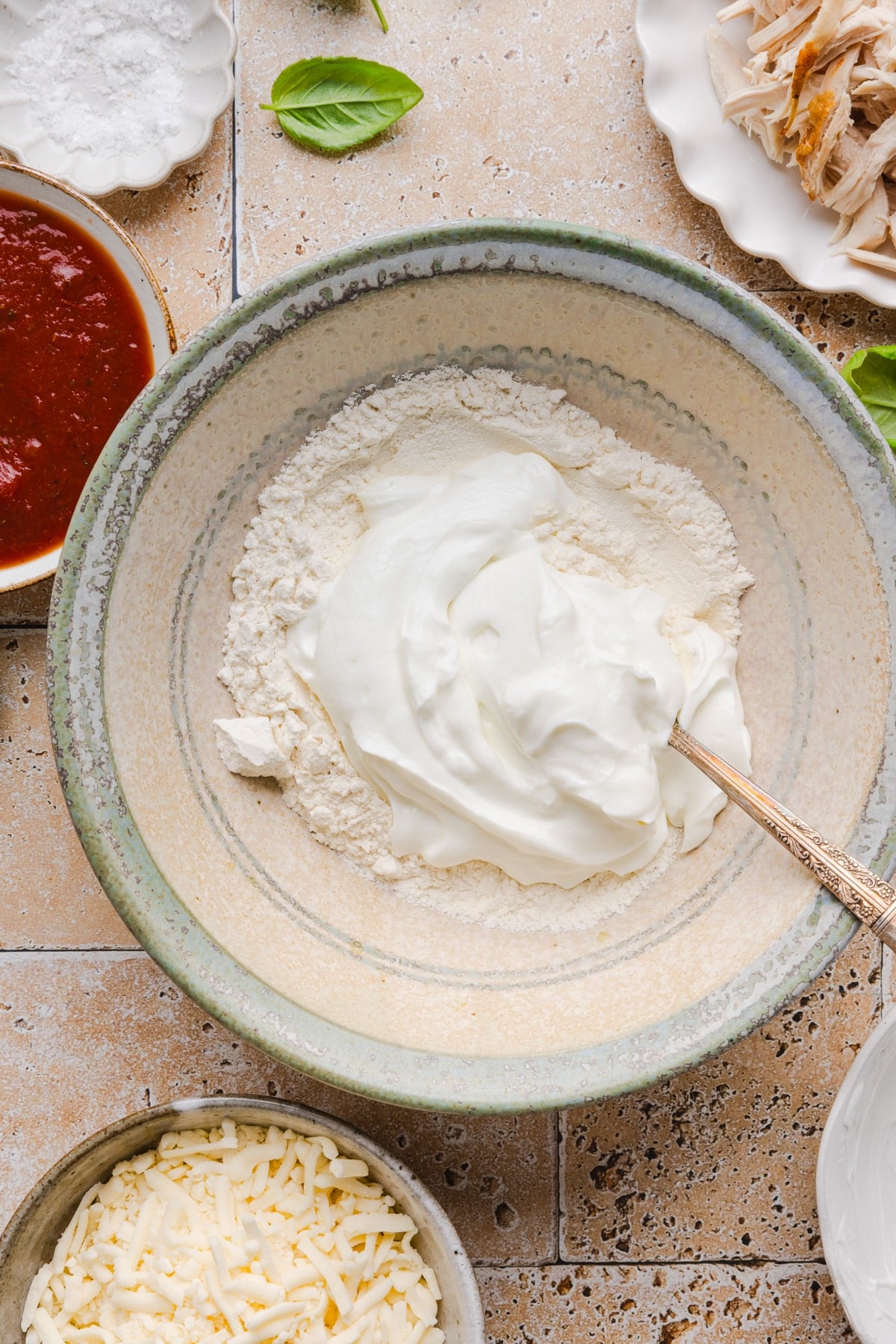
- Make the dough. Add the Greek yogurt or cottage cheese, flour, salt, and baking powder to a medium bowl.
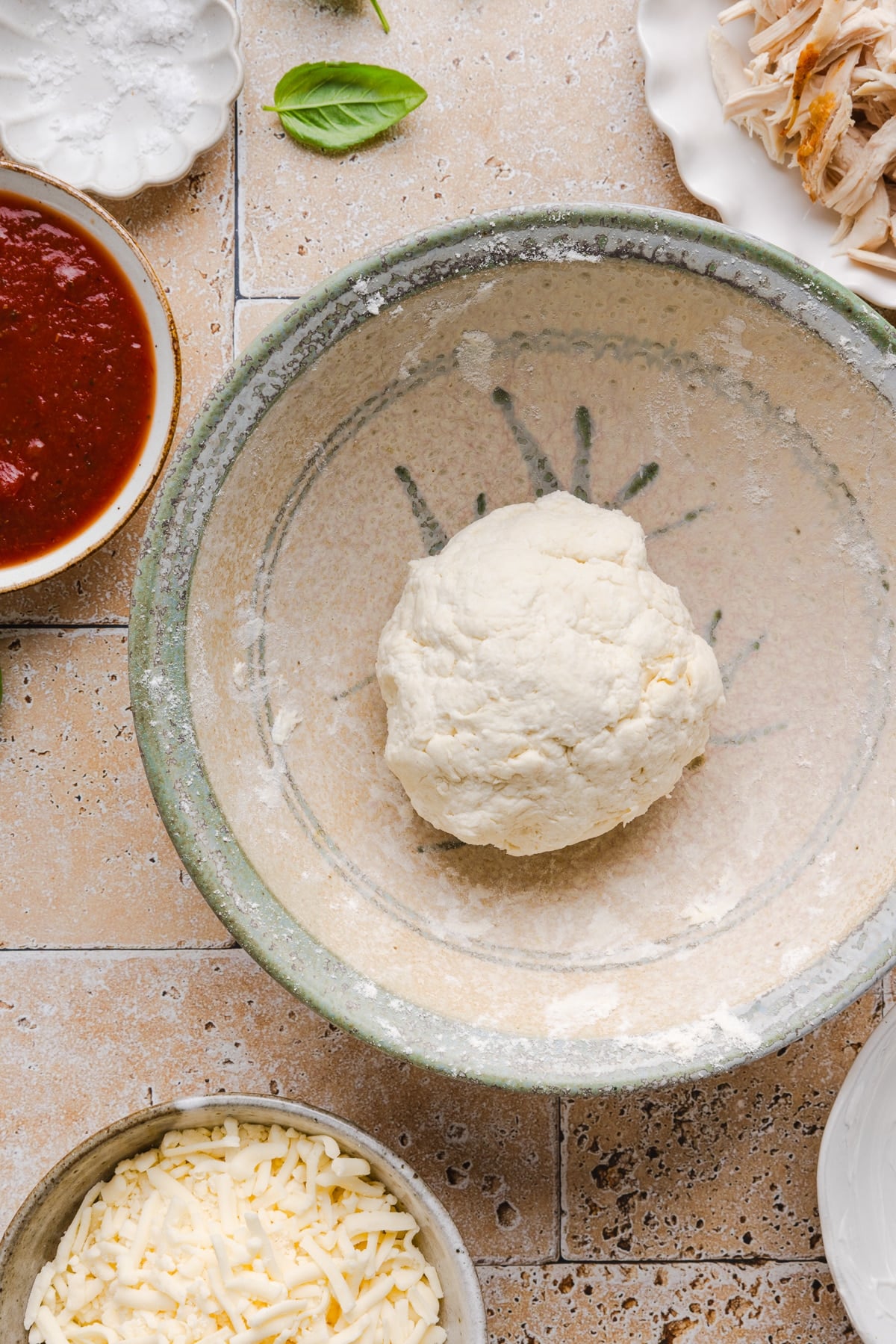
- Mix with a spoon, then use clean hands to form it into a ball.
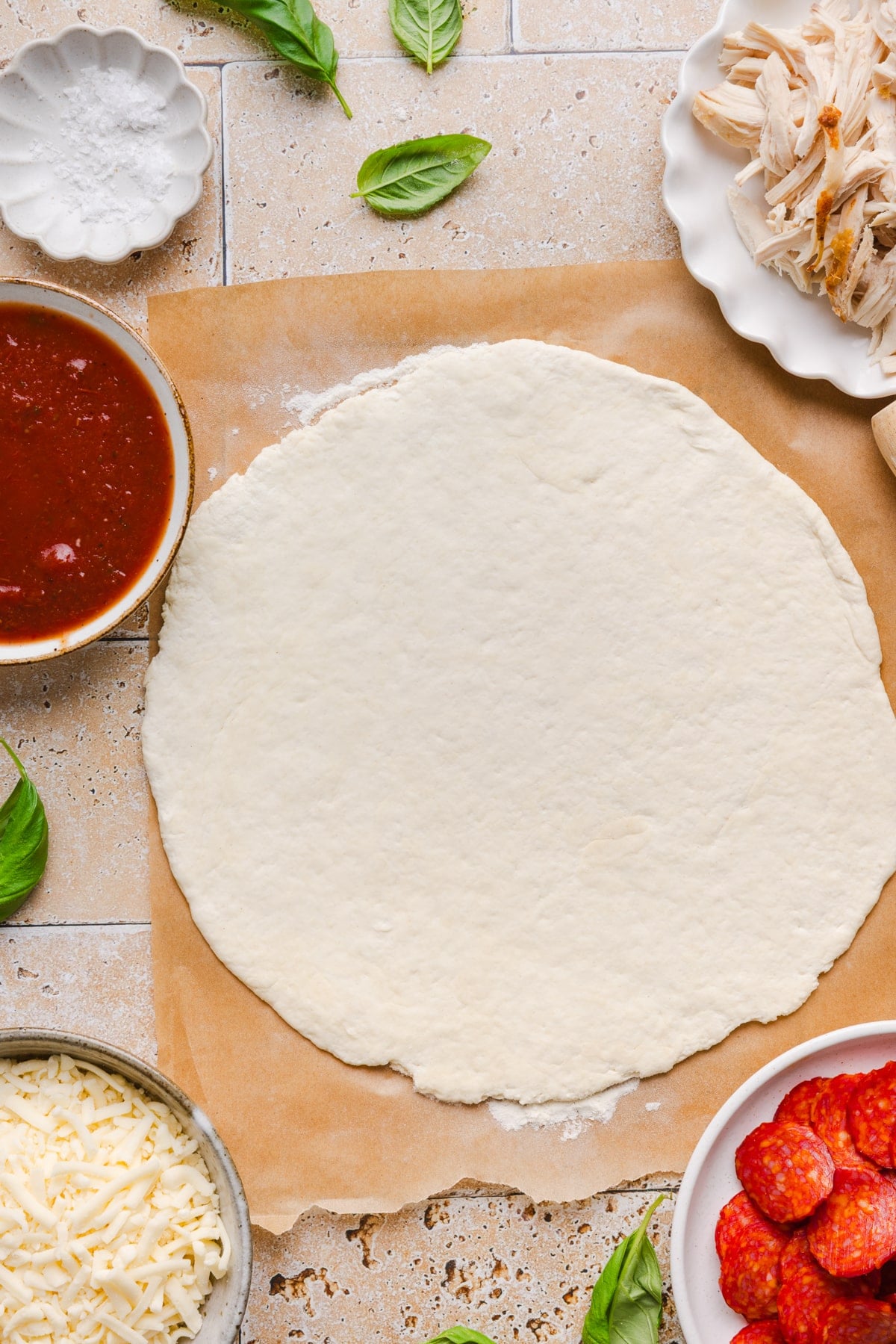
- Roll out the crust. Lightly flour a piece of parchment paper and press the dough flat with your hands. Use a lightly floured rolling pin to roll it into a thin pizza shape.
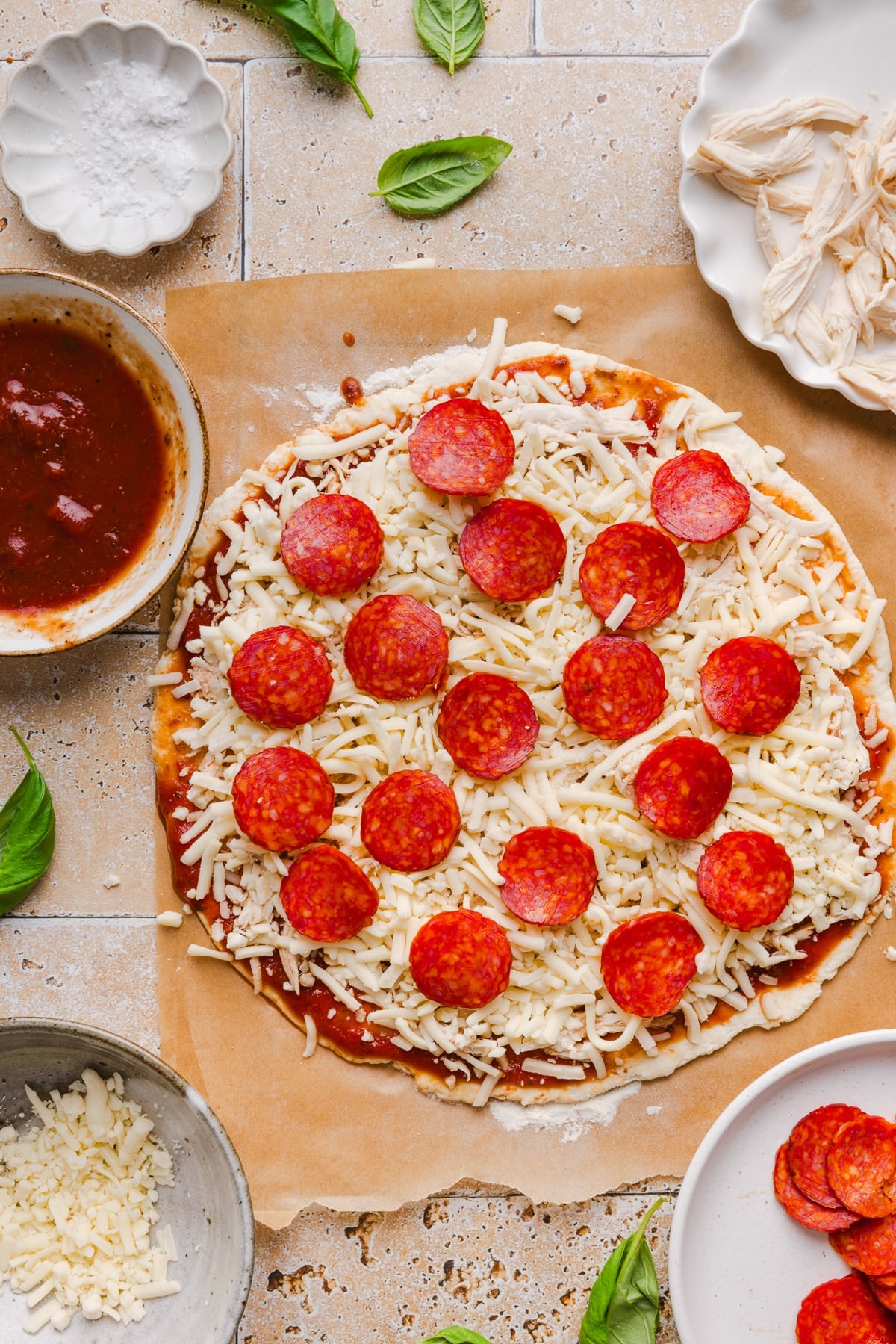
- Add the sauce, toppings, and bake. Transfer the parchment paper and pizza crust to a baking sheet, then spread the pizza sauce evenly over the dough. Layer on the shredded chicken first, followed by the mozzarella, pepperoni, and any veggies you’re using.
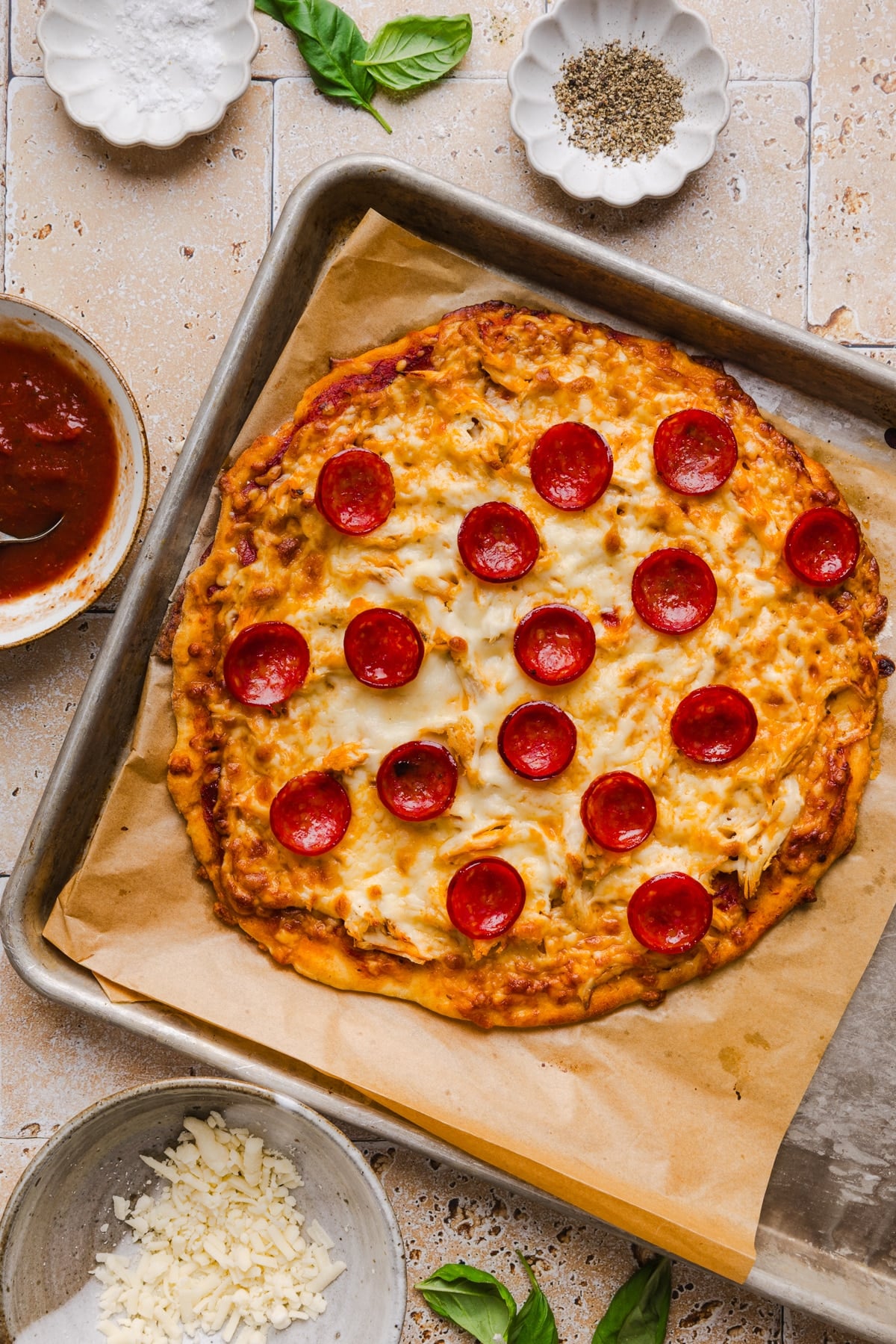
Bake at 400°F for 20-25 minutes, until the cheese is melted and the bottom and edges of the crust are golden brown.
jamie’s tips
Tips for the Best Protein Pizza Crust
This protein pizza dough is pretty forgiving, but a few little things make it much easier to work with and help the crust bake up just right.
- Don’t worry if the dough feels sticky. That’s completely normal with Greek yogurt or cottage cheese dough. If it starts sticking to your hands too much, rinse them off and lightly coat them with flour before you keep going.
- Roll it right on the parchment paper. Trust me, this makes life so much easier! Since the dough is a little sticky, rolling it on the parchment means you don’t have to worry about transferring the crust later.
- Flour your rolling pin, too. A light dusting keeps the dough from sticking as you roll. No rolling pin? A sturdy plastic tumbler or another non-breakable cylinder works just fine.
- Keep the crust about ¼-inch thick. That’s thin enough to cook through and give you that pizza-like texture, but still sturdy enough to hold all of your sauce, cheese, and toppings.
- Add a few extra minutes for lots of toppings. Start checking your pizza in 20 minutes. If you went heavy on the sauce, cheese, or toppings, it may need another 3-5 minutes for the crust to cook through and turn golden.
- Want to make it gluten free? You can try using 1 cup of gluten-free self-rising flour in place of the flour, baking powder, and salt. Just keep in mind that I haven’t tested the updated version this way, so the texture may be a little different.
- Want a crispier bottom? A regular baking sheet works great, but you can also bake the pizza on a preheated pizza stone for a slightly crispier crust.
Pizza Topping Combinations to Try
Once you have the crust down, it’s really easy to change the pizza depending on what you’re in the mood for. Here are a few combinations that work especially well:
- BBQ chicken: Swap the pizza sauce for barbecue sauce, then add shredded chicken, cheddar or mozzarella, red onion, and a little cilantro.
- Greek: Start with pizza sauce, then add spinach, artichoke hearts, kalamata olives, red onion, and feta.
- Veggie: Load it up with bell peppers, mushrooms, onions, spinach, tomatoes, and mozzarella. I like to sauté the watery vegetables first so they don’t release as much moisture onto the pizza.
- Hawaiian: Add pizza sauce, mozzarella, Canadian bacon or ham, and pineapple for that salty-sweet combo.
- Meat lover’s: Try turkey pepperoni, cooked sausage, Canadian bacon, and mozzarella. You can use ground chicken or turkey here too.
- Margherita: Keep it simple with pizza sauce, fresh mozzarella, sliced tomatoes, and plenty of fresh basil after baking.
Storage and Reheating
Keep leftover high protein pizza in an airtight container in the fridge for up to 4 days. I prefer to reheat in the air fryer because it brings some of that crispness back to the crust. Reheat at 350°F for 3-4 minutes, or use the microwave in 15-20 second intervals when you need something quick.
To freeze, let the pizza cool completely, then wrap the slices well and freeze for up to 2 months.
More High Protein Recipes You’ll Love


If you’ve made and love this High Protein Pizza or any other recipe on my blog, please leave a 🌟 rating and comments below!

Easy Healthy High Protein Pizza
Ingredients
- 1 cup plain Greek yogurt or cottage cheese
- 1 cup flour
- 1 teaspoon baking powder
- 1/4 teaspoon salt
- 1 1/2 cups shredded chicken breast, (I like to use rotisserie chicken for convenience)
- 1/2-3/4 cup pizza sauce
- 1 1/2 cups mozzarella cheese
- 10-12 slices turkey pepperoni
- Optional toppings: sliced bell pepper, onion, fresh basil
Instructions
- Preheat the oven to 400°F.
- In a medium bowl, add the Greek yogurt or cottage cheese, flour, baking power, and salt. Mix with a spoon and then finish with clean hands, forming into a round ball of dough. Note: it will be a little bit sticky! If it gets too sticky, rinse your hands and lightly coat your hands with flour before continuing to work on the dough.
- Next, lightly flour some parchment paper. First press the dough flat with your hands and then roll the dough into a pizza shape with a lightly floured rolling pin. The dough should be quite thin but still durable. Note: Since the dough will be somewhat sticky, I recommend doing this directly on the parchment paper you'll be baking on.
- Transfer your parchment paper and pizza crust to a baking sheet. Spread your pizza sauce evenly on the rolled out pizza dough.
- Add the shredded chicken first, and then top with shredded cheese, pepperoni, and any veggies or toppings.
- Bake in the oven for 20-25 minutes until the cheese is melted and the crust is golden brown. Note: If you use less sauce and less toppings, it will be done closer to 20 minutes. If you have more sauce and more toppings, it will take a few minutes longer.
Notes
- Sticky dough is normal. Greek yogurt and cottage cheese dough will be a little sticky. Lightly flour your hands, rolling pin, and parchment paper as needed, but avoid adding too much extra flour or the crust can become dry.
- Roll the crust thin. Aim for about ¼-inch thickness so the center cooks through while the crust stays sturdy enough to pick up and hold the toppings.
- Self-rising flour option. You can use 1 cup self-rising flour in place of the all-purpose flour, baking powder, and salt.
- Check for doneness. Bake until the cheese is melted and bubbly and the edges and bottom of the crust are golden brown. Pizzas with heavier toppings may need an additional 3–5 minutes.
- Storage: Refrigerate leftovers in an airtight container for up to 4 days. For the crispiest crust, reheat slices in the air fryer at 350°F for 3–4 minutes.
Nutrition
Nutrition information is automatically calculated and should only be used as an estimate.












My husband and I enjoyed this! Yummy and easy! I didn’t have self-rising flour but with a quick search, I found how to turn my all-purpose into a substitute. I had trouble rolling the dough but it still turned out tasty. Thank you!
The dough can definitely a little bit sticky! I find working with flour hands and a really well-floured rolling pin can help! I’m so glad you enjoyed, thank you for leaving a review!
I wish you would have told us how much fat is in the pizza; what is the sodium content? Carbohydrate content?
Loved this post! 🙌 I totally agree, finding a high-protein pizza that actually tastes good and aligns with your health goals can be tough. I’m working on a frozen pizza brand called LOOPiNi that’s made with lupin flour (a super high-protein, high-fiber flour), and we’ve been getting great feedback from people looking for exactly what you described here. Thanks for shedding light on this space, super inspiring to see more people caring about both flavor and nutrition!
Just a small question. I accidentally bought all purpose flour, will that work?
Just add a teaspoon of baking powder and 1/4 teaspoon of salt to the flour!
So easy and yummy! My toddler loved it.
Woohoo! Toddler approved is the best 🙂
Sounds yummy but do you think processed turkey is healthy? I always think that all processed meat is highly discouraged….
You can skip pepperoni if you prefer!