
This post may contain affiliate links. Please read our disclosure policy.
Vitaminwater has been around for more than twenty years, but it still raises the same question every time someone grabs one from the cooler: is this actually good for me, or is it just fancy sugar water with a health halo?
As a Registered Dietitian, my honest answer is that it depends on which version you’re drinking and what you’re comparing it to. There’s more nuance here than most people expect.
In this post I’ll break down exactly what’s in Vitaminwater, how much sugar we’re actually talking about, whether the vitamins are doing anything useful, and whether Vitaminwater Zero is a better choice.
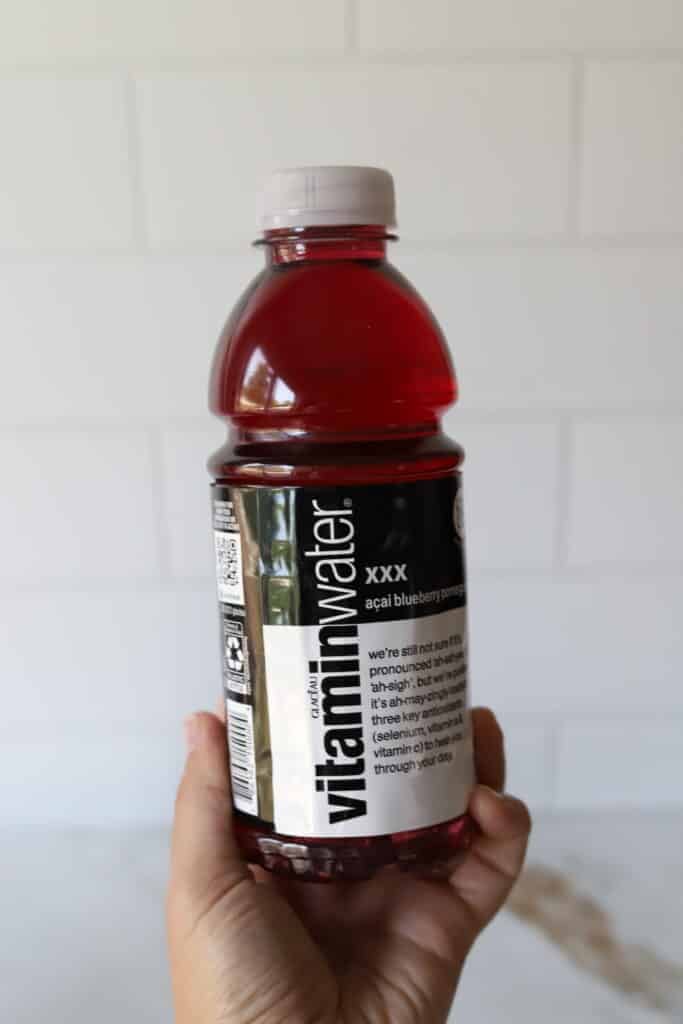
What is Vitaminwater?
Vitaminwater is a brand of flavored, vitamin-fortified water owned by Coca-Cola. It comes in 20 oz bottles in a wide range of flavors, each containing a mix of vitamins, minerals, and either sugar or a sugar-free sweetener depending on the variety.
The name does a lot of marketing work. Water is healthy. Vitamins are healthy. Put them together and it sounds like a no-brainer. But the ingredient list tells a more complicated story, which is exactly what we’re going to get into.
Nutrition Facts
Nutrition varies slightly by flavor, but here’s how a standard 20 oz bottle of original Vitaminwater compares to Vitaminwater Zero:
| Nutrients | Vitaminwater (original) | Vitaminwater Zero |
|---|---|---|
| Calories | 120 | 0 |
| Sugar | 32g | 0g |
| Sweetener | Crystalline fructose, cane sugar | Stevia, monk fruit |
| Vitamin C | 100% DV | 100-200% DV |
| B vitamins | B3, B5, B6, B12 | B3, B5, B6, B12 |
| Electrolytes | Potassium, magnesium, calcium | Potassium, magnesium, calcium |
| Artificial sweeteners | No | No |
A few things worth flagging from this table:
The 32 grams of sugar in a bottle of original Vitaminwater is the equivalent of 8 teaspoons of sugar. The American Heart Association recommends no more than 25 grams of added sugar per day for women, meaning one bottle of original Vitaminwater puts you over that limit before you’ve eaten anything.
Vitaminwater Zero eliminates the sugar entirely and uses stevia and monk fruit instead, both of which are naturally derived, zero calorie sweeteners with no artificial ingredients. If you enjoy Vitaminwater, the zero sugar version is the objectively better choice from a nutritional standpoint.
Nutrition data sourced from Coca-Cola’s official US Vitaminwater product pages. Figures may vary slightly by flavor.
Potential Benefits
Hydration
The most straightforward benefit of Vitaminwater is that it’s mostly water. If you struggle to drink enough plain water throughout the day and find flavored options more appealing, it genuinely can help you stay hydrated. That’s not nothing.
That said, if you have no problem drinking plain water, Vitaminwater likely isn’t adding anything meaningful to your routine that water alone wouldn’t.
Vitamins
Each bottle also contains meaningful amounts of vitamin C and several B vitamins. If you’re someone who doesn’t eat a lot of fruits and vegetables, this can be a convenient way to fill some gaps.
The honest caveat is that most people who eat a reasonably varied diet aren’t deficient in these vitamins. And if your body doesn’t need the extra vitamin C or B vitamins, it’ll just flush them out. You’re not doing harm, but you may not be getting much benefit either. If you think you might have a nutrient deficiency, a conversation with your doctor is a better starting point than a flavored water.

Potential Drawbacks
Sugar Content
The sugar content in original Vitaminwater is significant. A 20 oz bottle of original Vitaminwater contains around 27 to 32 grams of added sugar depending on the flavor. To put that in context, the American Heart Association recommends no more than 25 grams of added sugar per day for women and 36 grams for men. One bottle of original Vitaminwater can get you right up to or over that limit before you’ve eaten a single thing.
If you’re watching your sugar intake, the zero sugar version is genuinely the better choice. It has the same vitamins and flavors with none of the added sugar.
Cost
The cost adds up. A single bottle runs around $2 to $2.50 or more at most retailers. If you’re drinking one regularly, that adds up quickly compared to plain water which is essentially free. If you love the taste and it helps you stay hydrated, it can be worth it. But it’s not something most people need to spend money on every day.
Caffeine (in some flavors)
Some flavors contain caffeine. Not all Vitaminwater flavors have caffeine but some do. The Energy Tropical Citrus flavor for example has 60mg per bottle, which is roughly half the caffeine in an 8 oz cup of coffee. That isn’t necessarily a problem but it’s worth knowing if you’re already getting caffeine from other sources throughout the day.
Health Halo
One of the trickiest things about Vitaminwater is that the name and marketing make it feel like a health drink, which can lead people to drink more of it than they would a soda, even though the sugar content is not dramatically different. And for most people who eat a reasonably varied diet, the vitamins it contains aren’t filling any real gap.
You’re essentially paying a premium for flavored sugar water with vitamins your body likely doesn’t need and will flush out anyway. That’s not a reason to never drink it, but it’s worth being clear-eyed about what you’re actually buying.
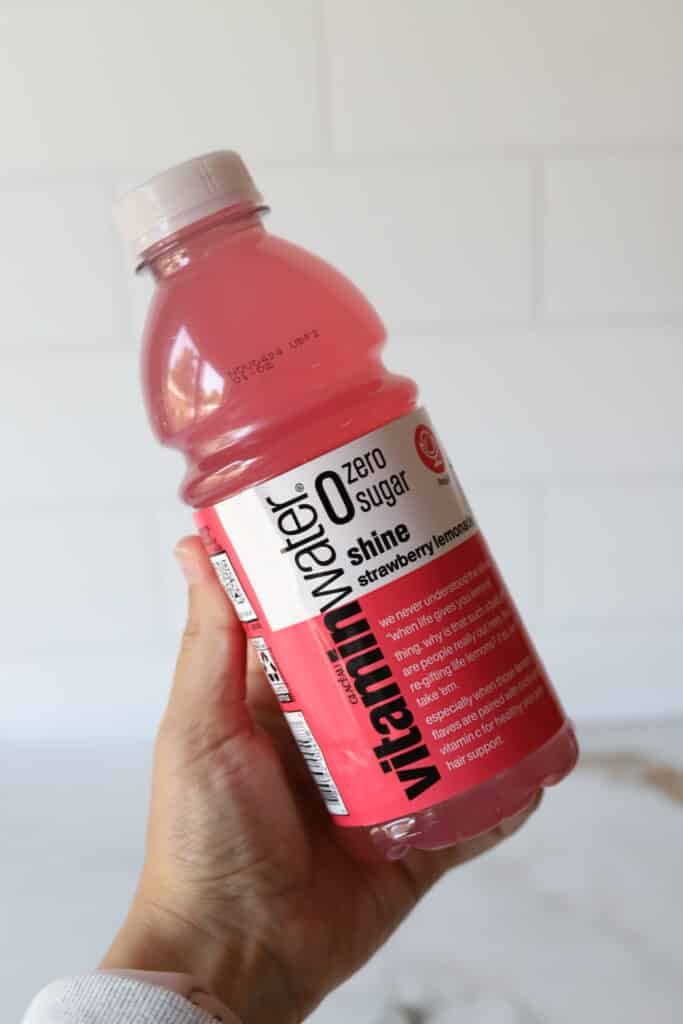
Is Vitaminwater Zero A Better Choice?
In most cases, yes. Vitaminwater Zero has the same vitamins, the same flavors, and the same electrolytes as the original, but with zero grams of added sugar and zero calories. It’s sweetened with stevia and monk fruit, both of which are natural, zero calorie sweeteners with no artificial ingredients.
If you enjoy the taste of Vitaminwater and want to keep drinking it, the zero sugar version is the straightforward upgrade. You’re not giving up anything meaningful by switching.
A few things worth knowing about Vitaminwater Zero:
- It contains no artificial sweeteners, which makes it a more appealing option than many other sugar-free drinks on the market.
- Some people are sensitive to stevia or monk fruit and find the taste slightly bitter. If that’s you, it may take some getting used to.
- The vitamin content is similar to the original and in some flavors actually higher, with some varieties offering 200% of your daily vitamin C needs per bottle.
The honest verdict: if you’re choosing between original Vitaminwater and Vitaminwater Zero, the zero sugar version wins on nutrition every time. If you’re choosing between Vitaminwater Zero and plain water, plain water is still the better everyday hydration choice, but Vitaminwater Zero is a reasonable occasional alternative especially if it helps you drink more fluids overall.
The Marketing Controversy
Vitaminwater has faced significant criticism over its health marketing claims. In a notable lawsuit, Coca-Cola was sued for misleading advertising, with plaintiffs arguing that Vitaminwater was being marketed as a health drink despite its high sugar content. In their own legal defense, Coca-Cola’s lawyers argued that no reasonable consumer would believe Vitaminwater was actually a healthy beverage, which is a striking thing for a company to say about its own product.
The case was eventually settled and some marketing language was updated. But it’s a useful reminder that product names like “focus,” “energy,” and “essential” don’t mean healthy. That’s not unique to Vitaminwater, it’s true of most packaged food and drink marketing, and it’s worth keeping in mind.
Frequently Asked Questions
It depends on which version you’re drinking. Original Vitaminwater contains up to 32 grams of added sugar per bottle, which is more than the American Heart Association’s daily recommended limit for women. Vitaminwater Zero has the same vitamins and flavors with no added sugar, making it the better nutritional choice. Neither version is a health drink, but Vitaminwater Zero is a reasonable occasional alternative to plain water if you enjoy the taste.
Vitaminwater Zero is a better choice than the original since it has zero sugar and zero calories while keeping the vitamins and flavors. It’s sweetened with stevia and monk fruit, both natural sweeteners with no artificial ingredients. It’s not a replacement for plain water but it’s a decent option if flavored water helps you stay hydrated.
A 20 oz bottle of original Vitaminwater contains between 27 and 32 grams of added sugar depending on the flavor. That’s roughly 7 to 8 teaspoons of sugar and meets or exceeds the American Heart Association’s recommended daily limit for women in a single bottle.
Original Vitaminwater has significantly less sugar than a comparable size soda, so it’s a modest improvement. But it’s still a sugary drink and the vitamin content doesn’t offset the sugar. Vitaminwater Zero is a meaningfully better choice than soda since it has no sugar at all.
For most people eating a reasonably varied diet, probably not much. The vitamins in Vitaminwater are water soluble, meaning your body flushes out whatever it doesn’t need. If you’re genuinely deficient in vitamin C or B vitamins, a whole food source or a targeted supplement is a more effective solution than a flavored water.
Yes, it contributes to your daily fluid intake since it’s mostly water. If you find plain water boring and Vitaminwater helps you drink more throughout the day, that’s a legitimate benefit. Just be mindful of the sugar content if you’re drinking the original version regularly.
That’s A Wrap
Vitaminwater isn’t a health drink, but it isn’t the villain it’s sometimes made out to be either. The original version has more sugar than most people realize and the vitamin content isn’t doing much for anyone eating a reasonably balanced diet. But if you enjoy it occasionally, that’s completely fine.
If you’re going to drink it regularly, Vitaminwater Zero is the smarter choice. Same taste, same vitamins, none of the sugar.
And if you’re drinking it because you find plain water boring and it helps you stay hydrated? That’s a perfectly valid reason. Just don’t mistake it for a health supplement.
If you’re looking for more of my honest takes on popular drinks and products, here are a few you might like:














I really enjoyed reading this! I had no idea that vitamin water contains added sugars, and your breakdown of the pros and cons was super helpful. It definitely made me think twice about choosing it as a ‘healthy’ option. Thanks for the valuable insight.
I have also written an article about this, https://www.webmarketinginfo.com/is-vitamin-water-good-for-you-get-incredible-insights/