
This post may contain affiliate links. Please read our disclosure policy.
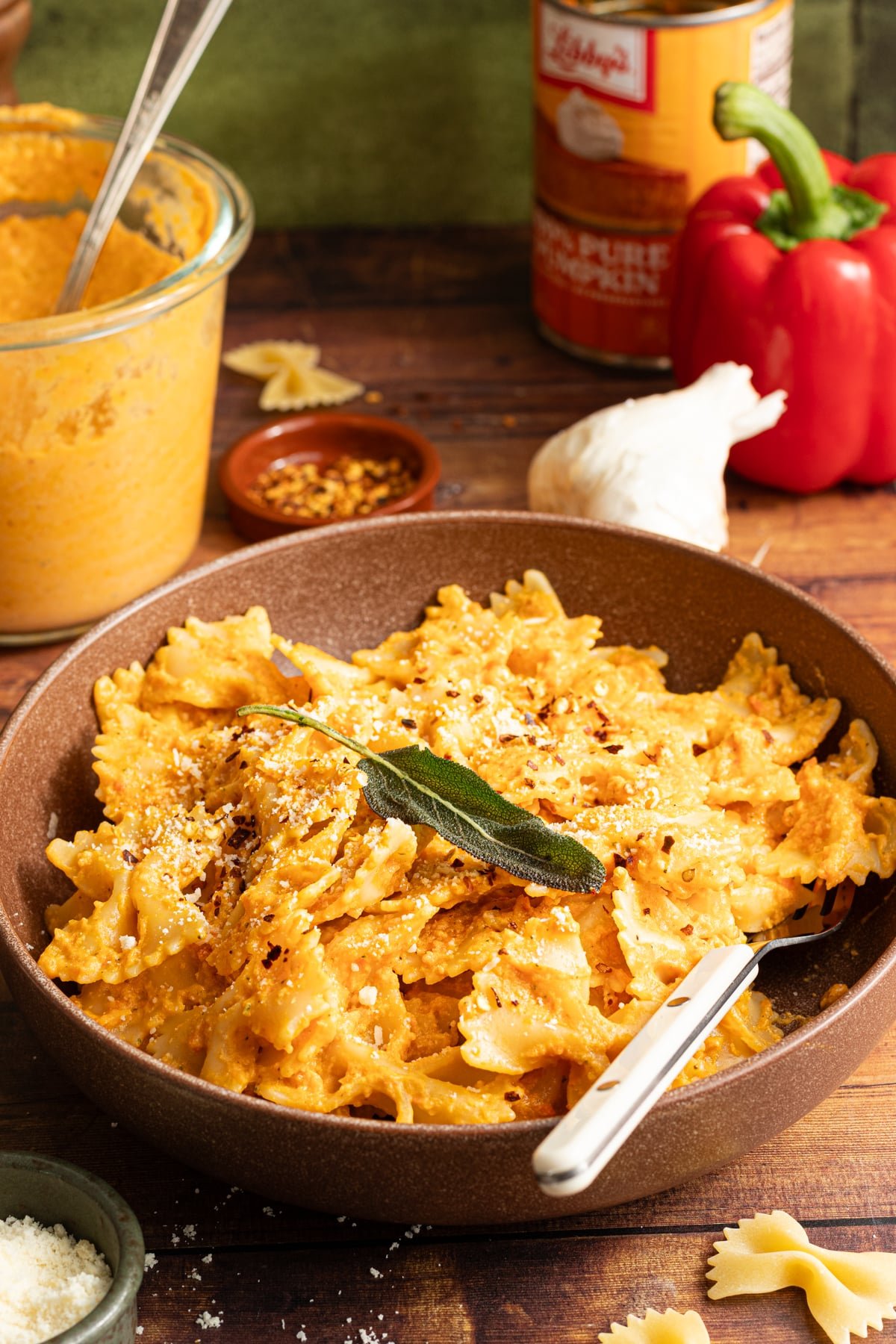
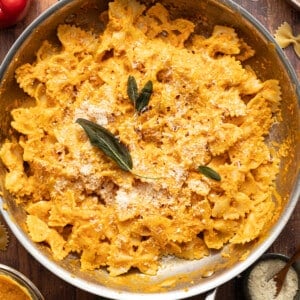
You don’t need heavy cream to make this High Protein Pumpkin Pasta Sauce. Full-fat cottage cheese gives the sauce a smooth, creamy texture and extra protein, while real pumpkin, Parmesan, garlic, and fresh sage bring plenty of savory flavor.
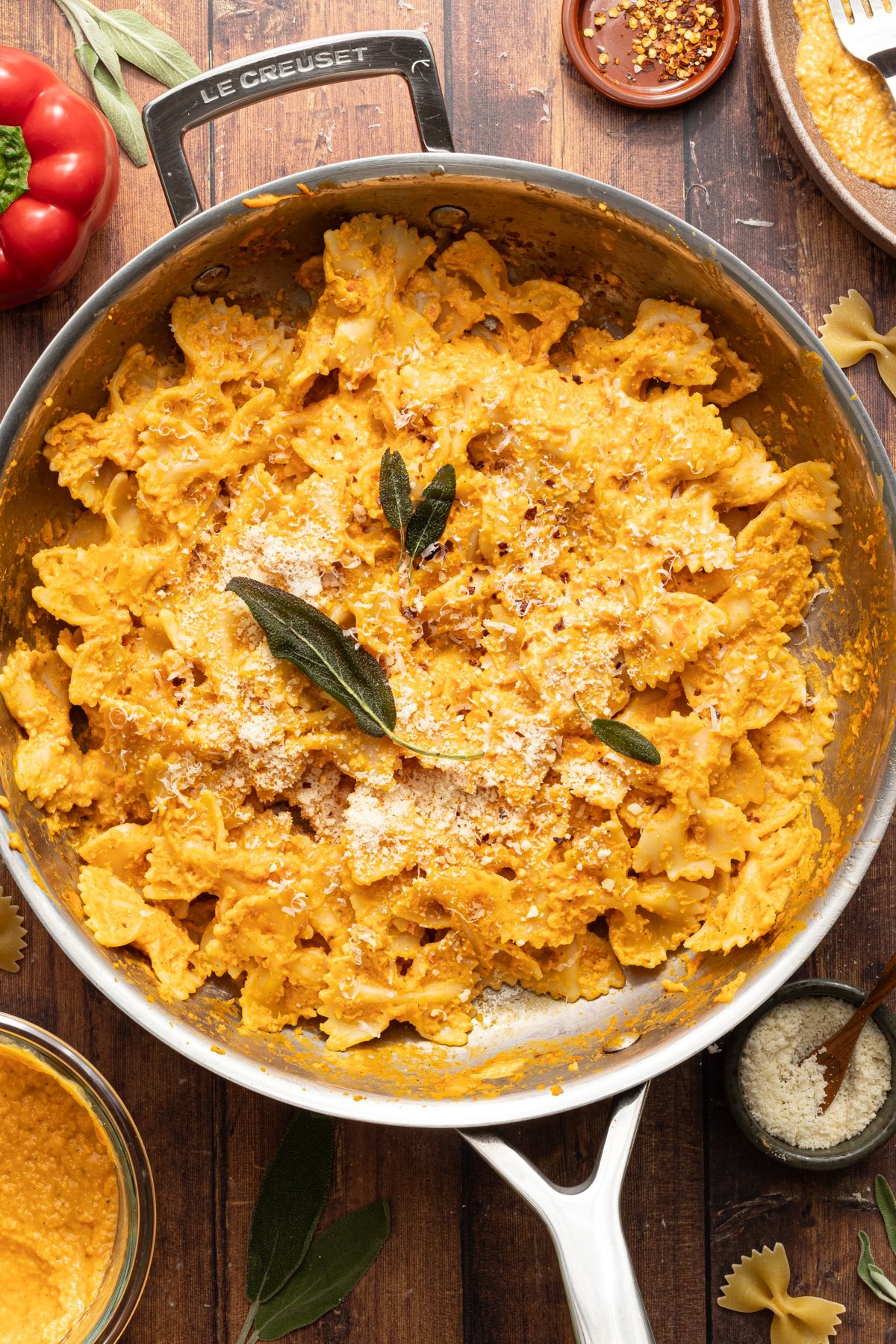
Table of Contents
I wanted to put a pumpkin spin on the pasta sauces I already love. I took my veggie pasta sauce and cottage cheese pasta sauce as inspiration, then started playing around with pumpkin, Parmesan, garlic, and fresh sage.
I wasn’t looking for something that tasted like pumpkin pie, though. I wanted the pumpkin to add a little sweetness and earthy flavor while the rest of the ingredients kept it savory. That’s how I ended up with this creamy pumpkin pasta sauce that still feels like an easy weeknight dinner.
Why Cottage Cheese Works in This Pumpkin Pasta Sauce
Full-fat cottage cheese does more than add protein here. Once blended with the pumpkin, Parmesan, milk, and sautéed vegetables, it gives the sauce enough body to cling to the pasta while keeping it smooth and creamy.
Here’s why I keep coming back to this one:
- Made with real pumpkin. There’s plenty of real pumpkin in the sauce, but don’t worry, it doesn’t taste like pumpkin pie. It adds a subtle sweetness and earthy flavor instead.
- 30 grams of protein and 12 grams of fiber. When I make this with chickpea pasta, each serving has 30 grams of protein and 12 grams of fiber. The cottage cheese and Parmesan add protein to the sauce, while the chickpea pasta boosts both protein and fiber.
- Perfect for meal prep. I love making a batch ahead and keeping it in the fridge, so all I have to do is cook the pasta and warm the sauce for a quick weekday dinner.
Ingredient Notes
A few ingredients make a big difference in how this sauce turns out, so here’s what I recommend:
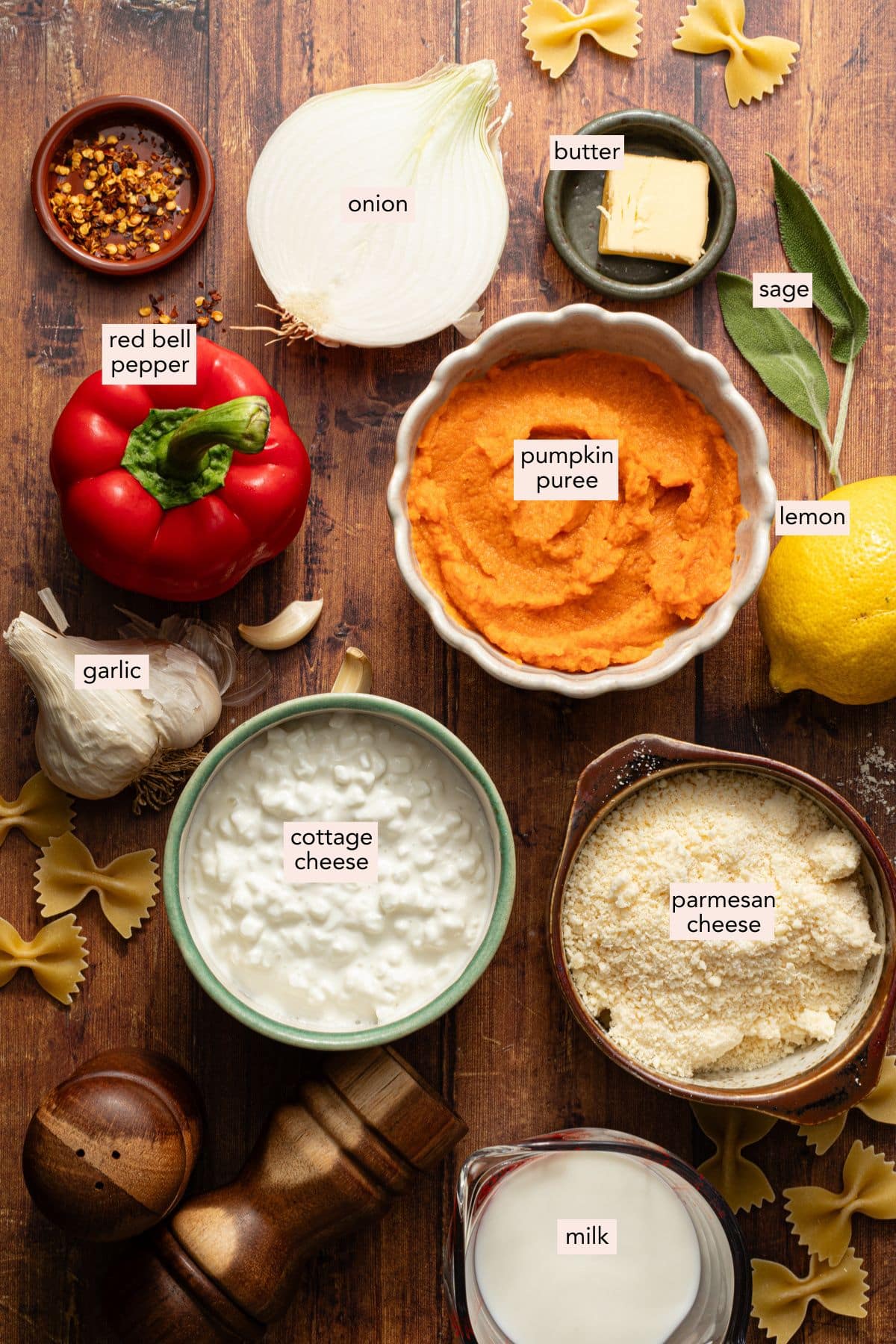
For full recipe instructions and complete list of ingredients, scroll down to the recipe card at the bottom of this page.
- Pumpkin puree: Make sure you use plain pumpkin puree, not pumpkin pie filling. Canned pumpkin works perfectly here, but you can use homemade pumpkin puree too.
- Cottage cheese: Full-fat (4%) cottage cheese works best here. I tested lower-fat versions, but they don’t give the sauce the same smooth texture and are more likely to separate when heated. I’d stick with full-fat for the best results.
- Parmesan: I prefer freshly grated or finely shredded Parmesan because it blends more smoothly into the sauce than larger pre-shredded pieces.
- Red bell pepper: The red bell pepper adds a little sweetness and blends right into the sauce, so I wouldn’t skip it.
- Fresh sage: Fresh sage gives the sauce a subtle earthy flavor that works really well with the other savory ingredients. Use about ½ teaspoon dried sage if that’s what you have, or swap it for fresh rosemary.
- Chickpea pasta: I use chickpea pasta to bring the complete meal to 30 grams of protein and 12 grams of fiber per serving. Regular pasta works too, but the nutrition information will change depending on the pasta you use.
Best Pasta for Pumpkin Sauce
Thick, creamy sauce works with just about any pasta shape. I personally like shapes with ridges, curves, or pockets that give the sauce plenty of space to cling, so I often use bowtie or rotini chickpea pasta for the extra protein and fiber. Penne, rigatoni, and shells are all great options, but longer noodles like fettuccine or spaghetti work well too. One batch of sauce is enough for about 16 ounces of pasta.
How to Make Pumpkin Pasta Sauce
Once your ingredients are prepped, the sauce comes together pretty quickly.
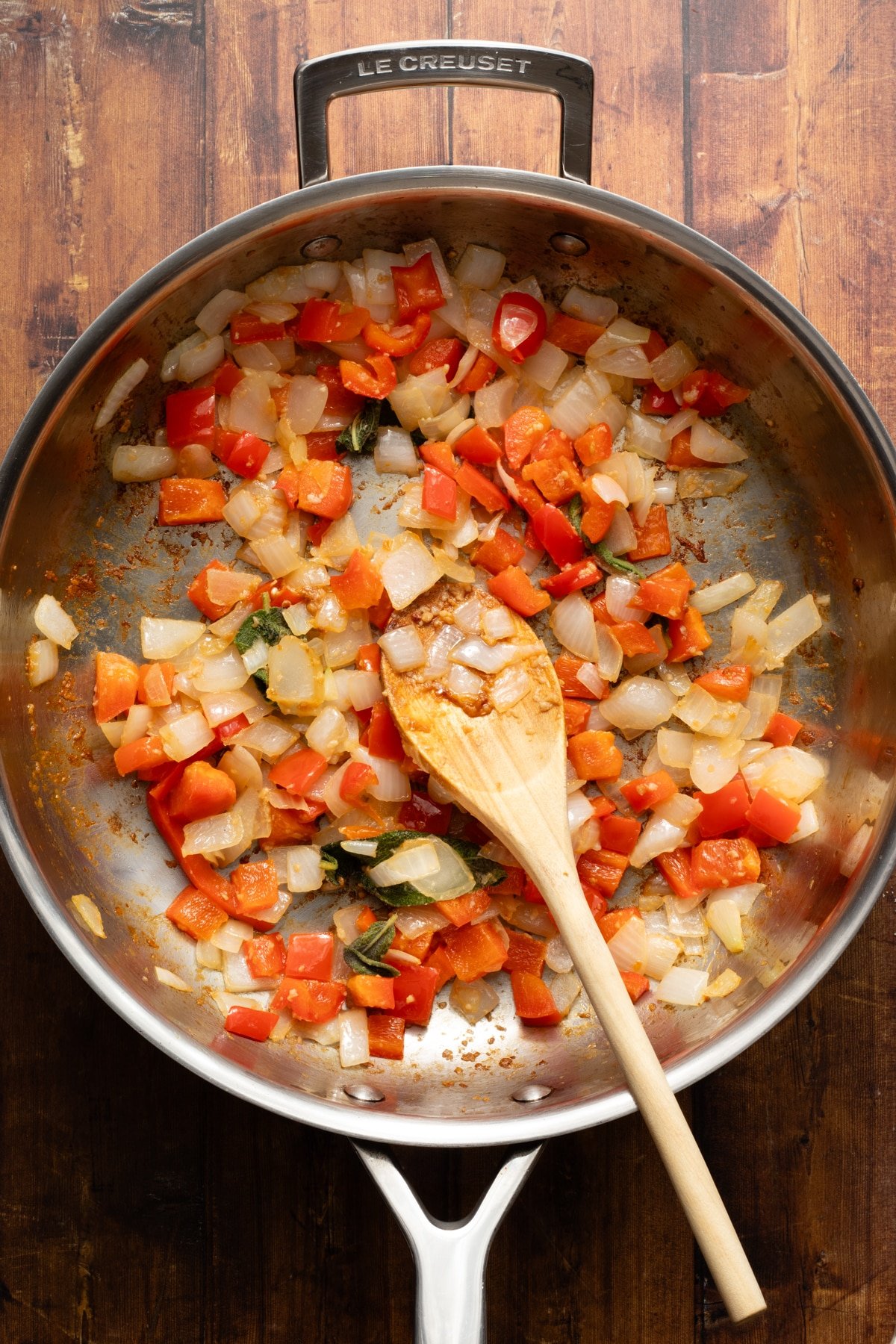
- Sauté the veggies. Melt the butter in a sauté pan over medium heat. Add the garlic, onion, red pepper, and sage, and sauté for 6-7 minutes, until the vegetables are soft.
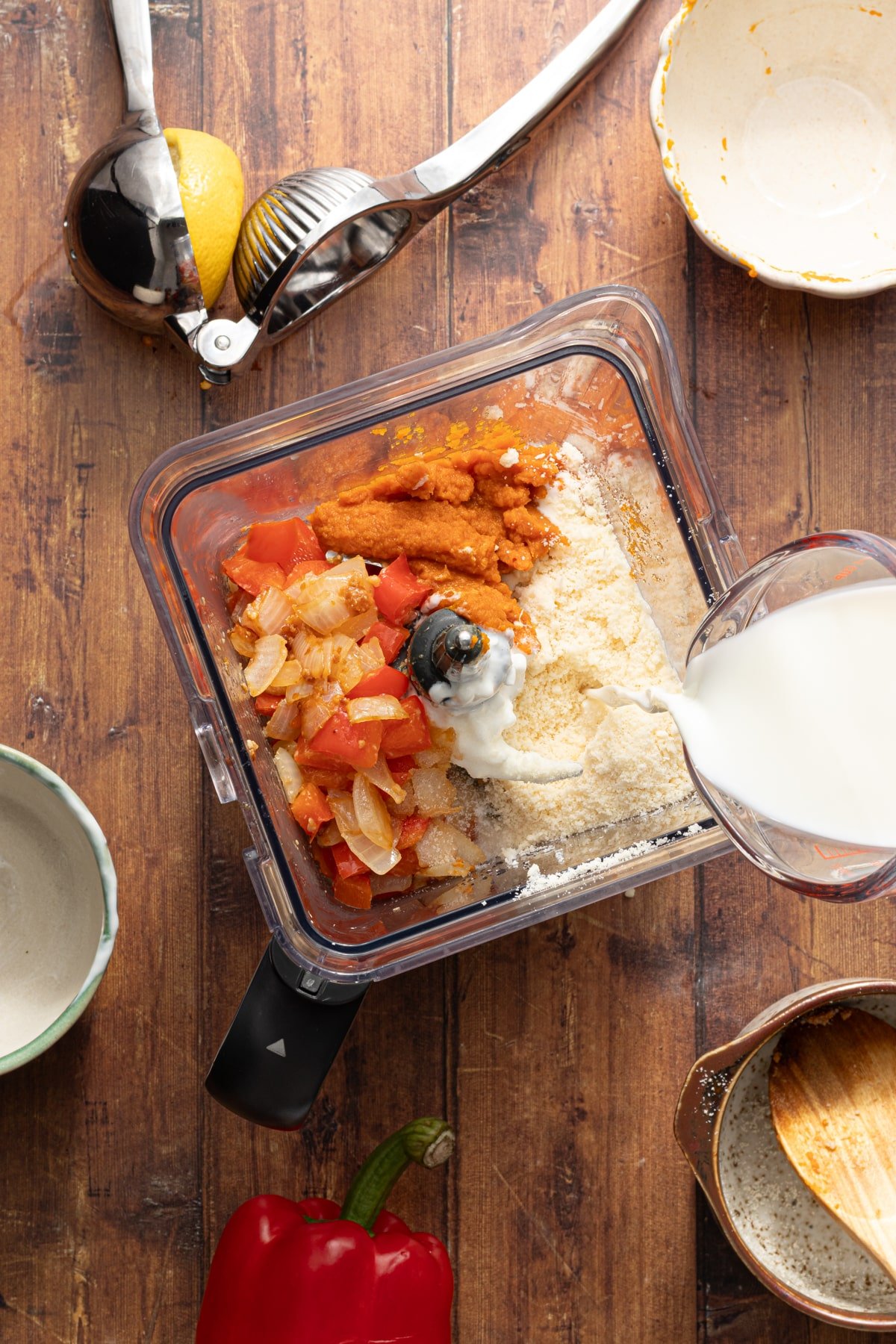
- Add to a blender. Add the sautéed vegetables and all remaining ingredients to a high-speed blender like this.
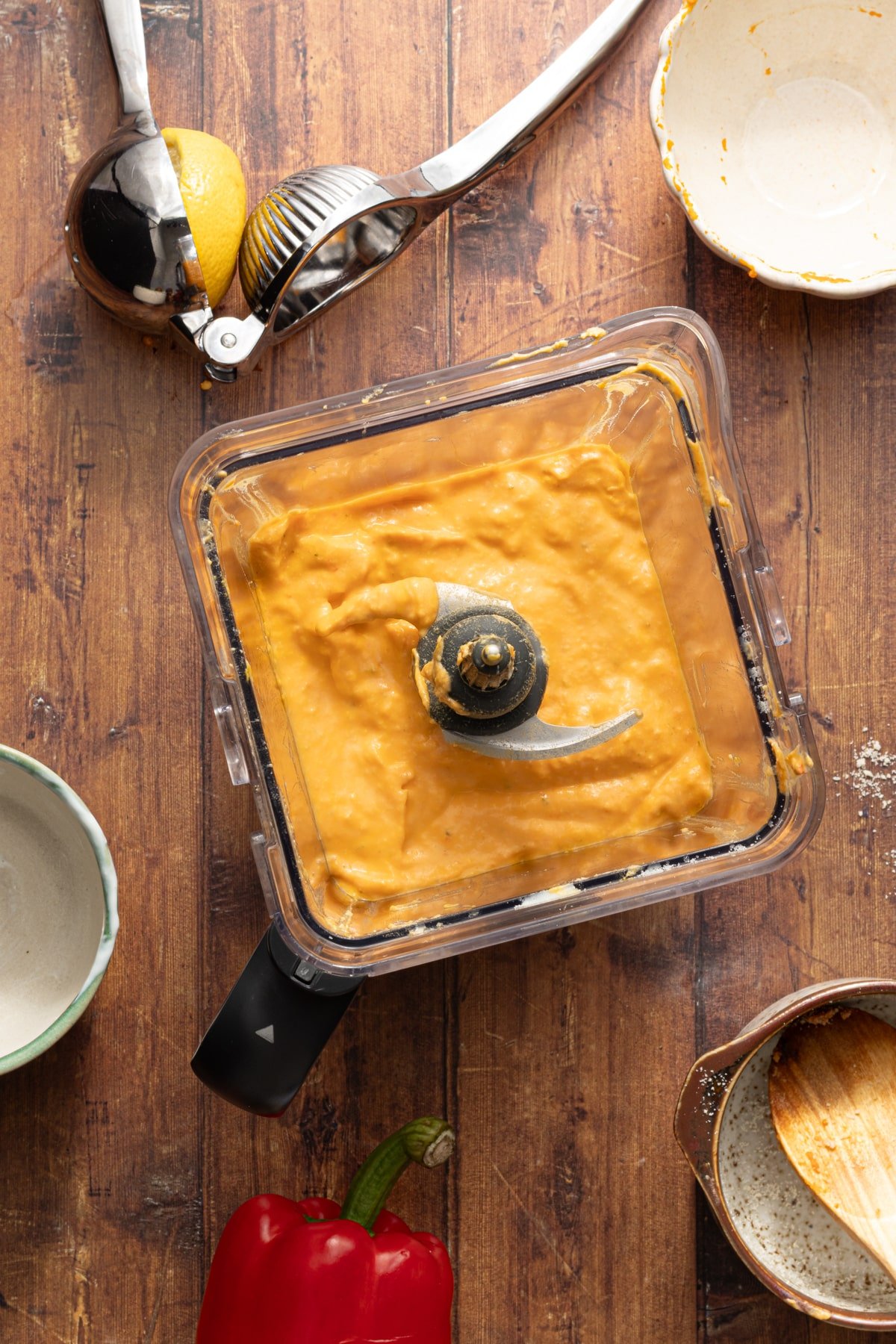
- Blend until smooth. Blend on high for 1-2 minutes, until completely smooth. Stop to scrape down the sides as needed, then taste and add more salt, pepper, or lemon juice if needed.
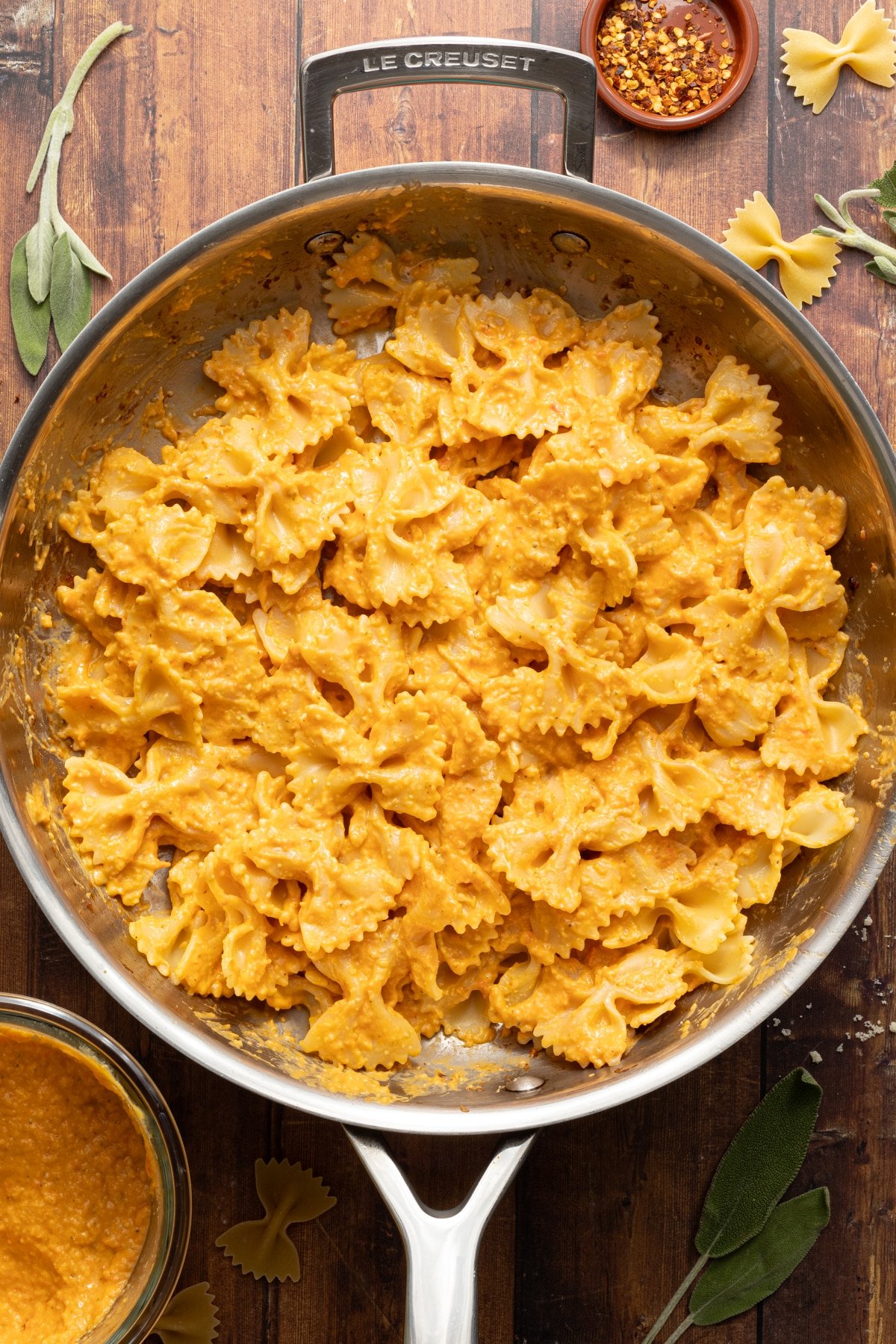
- Toss with pasta. Pour the sauce over your cooked pasta and toss until well coated. Warm over low heat just until heated through.
Jamie’s Tips
Tips for the Creamiest Pasta Sauce
A few small details make a big difference in how the sauce turns out.
- Blend until completely smooth. Blend on high for 1–2 minutes until the sauce looks completely smooth and silky. If you can still see little bits of cottage cheese, keep blending.
- Adjust the thickness as needed. If the sauce seems too thick, add a small splash of milk, pasta water, or vegetable broth and blend again until it reaches the consistency you like.
- Keep the heat low. Cottage cheese can separate when it gets too hot, so warm the finished pasta gently over low heat rather than letting the sauce simmer.
More Ways to Use Pumpkin Pasta Sauce
Tossing it with pasta is my favorite, but this sauce can do a little more than that.
- Make baked pasta. Add the sauced pasta to a baking dish and top with 2 tablespoons melted butter mixed with ½ cup breadcrumbs and ½ cup Parmesan. Bake at 400°F until golden brown.
- Make a protein bowl. Spoon it over chicken, my turkey meatballs, or roasted vegetables, then add a grain or chickpea pasta on the side.
- Use it on roasted vegetables. Drizzle it over broccoli, Brussels sprouts, cauliflower, or your favorite roasted veggies.
- Try stuffed pasta. Use it in place of marinara for stuffed shells or manicotti.
- Make pumpkin lasagna. Layer the sauce with ricotta or cottage cheese and spinach for a fun twist on traditional lasagna.
Storage and Meal Prep
The sauce is great to make ahead, especially when you want a quick dinner later in the week.
- Make ahead: Make the sauce ahead and refrigerate it separately, then cook the pasta when you’re ready to serve.
- Refrigerate: Store the sauce in an airtight container in the fridge for up to 4 days.
- Reheat gently: Warm it in a saucepan over low heat or microwave it in 15–30 second intervals, stirring between each one. Avoid overheating, since the cottage cheese can cause the sauce can separate.
More High Protein Fall Dinner Ideas

If you’ve made and loved these High Protein Pumpkin Pasta Sauce or any other recipe on my blog, please leave a 🌟 star rating and comments below!
High Protein Pumpkin Pasta Sauce
Ingredients
- 1 tbsp butter
- 1 small yellow onion, chopped
- 1 red bell pepper, chopped
- 3-4 large fresh sage leaves
- 6 cloves garlic, roughly minced
- 1 cup pumpkin puree, not pumpkin pie filling
- 1 cup cottage cheese, full fat
- 1 cup parmesan cheese, shredded or grated
- 1/2 cup milk
- 1 tbsp lemon juice, more to taste
- 1/2 tsp salt, more to taste
- 1/4 tsp black pepper, more to taste
- 16 oz. chickpea pasta, cooked
Instructions
- Melt butter in a sauté pan over medium heat. Add garlic, onions, red pepper and sage. Saute 6–7 minutes until veggies are soft.
- Add sauteéd onions, garlic, pepper and sage as well as all remaining ingredients to a high speed blender.
- Blend on high for 1-2 minutes until completely smooth (it should very very smooth, if it’s not– keep blending or turn up the power higher) Stop to scrape down the sides as needed. Taste test and add additional salt, pepper or lemon juice to taste.
- Pour over cooked pasta and toss until combined. Heat on low until warm enough to serve. Be careful to not overheat or the sauce may separate a bit.
- Top with extra parmesan cheese and fresh herbs if desired.
Notes
- Use full-fat cottage cheese: I get the smoothest, creamiest sauce with 4% cottage cheese. Lower-fat versions are more likely to separate when heated.
- Blend until completely smooth: Blend on high for 1–2 minutes, scraping down the sides as needed, until no visible bits of cottage cheese remain.
- Keep the heat low: Warm the finished sauce gently. Avoid simmering or boiling, which can cause the cottage cheese sauce to separate.
- Adjust the consistency as needed: If the sauce is too thick, add a splash of milk, reserved pasta water, or broth until it reaches the texture you like.
- Nutrition note: The listed protein and fiber are calculated using chickpea pasta. Regular pasta will change the nutrition information.
Nutrition
Nutrition information is automatically calculated and should only be used as an estimate.
Food photography by Marie-Catherine Dubé.










The sauce is so creamy and delicious! I can’t figure out how to cook chick pea pasta without getting mushy so I just used regular.
Can’t wait to try this! Do you think it would freeze well?
I’m not sure! Cottage cheese isn’t great to freeze but it might be okay blended up with other stuff! If you try report back 🙂
Made this the other day and it was delicious! My husband who was skeptical said it was “better than he thought it would be” and asked for me to make it again. Highly recommend. Also would be great with ravioli!
Would be SO good with ravioli! Please try and report back!
Love, Love. Love, Love, Love! I favor creamy, flavorful pasta dishes. This dish made it to my ” go to” recipe list. Better option with my gluten free pasta.
Thanks Barb! Definitely one of my favorites too 🙂
This is so delicious!!! I used a protein pasta and found this to be very satisfying and filling. A great meal prep recipe as it lasts for days!
I made this sauce to go with Organic Pumpkin (shaped) Noodles, and my boyfriend and I loved it! This sauce checked all the boxes for me: high in protein, creamy, savory, and seasonal. I have saved this recipe to make over and over!
Thanks Stephanie! Agree it really is such a yummy satisfying meal!
Do you think I could make this with Greek yogurt instead of cottage cheese?
I haven’t but my guess is that it would work, it will just be a different flavor from the Greek yogurt.